
Haunted place · Alabama, United States
Sturdivant Hall
Updated November 202611 sourcesHow to visit
- Protected heritage
- 10 archive documents
An 1856 Greek Revival mansion in Selma, Alabama, now a museum, said to be haunted by John Parkman, the ruined banker who died escaping jail in 1867.
The story
Older surveys call it the Watts-Parkman-Gillman House, but today it is Sturdivant Hall, a Greek Revival mansion in downtown Selma, in Dallas County, Alabama. Its grounds cover close to a full city block. Edward Vason Jones, the designer known for his work on White House interiors, considered it one of the finest antebellum Greek Revival houses in the Southeast.
It was built for Colonel Edward T. Watts, who bought the land in 1852 and served on the Selma City Council in 1857. The architect was Thomas Helm Lee of Selma, whom the National Register nomination describes as a cousin of Robert E. Lee. Sources disagree on when work began, with Wikipedia giving 1852 and the Encyclopedia of Alabama 1853, but the house was finished in 1856. The nomination points out how closely it resembles some of the great houses of Natchez, Mississippi, Stanton Hall in particular.
The Watts family moved to Texas in 1864. On February 12 of that year, Selma banker John McGee Parkman bought the house for $65,000, and his short time there is the basis of the ghost story. After the Civil War he took the helm of Selma's First National Bank, an institution that held federal deposits and lost heavily speculating in cotton. Wager Swayne, Alabama's military governor during Reconstruction, had the bank seized and Parkman arrested, and he was held at Cahaba, in the county jail according to Wikipedia and the federal prison according to the Encyclopedia of Alabama. On May 23, 1867, he tried to escape with help from friends and died in the attempt. How he died is unclear. The Encyclopedia of Alabama says he was shot; Wikipedia says only that he was killed. The National Register nomination says he drowned, and Wikipedia also cites an 1867 newspaper headline that called his death a suicide. Most sources say he died during an escape attempt, though one 1867 headline calls it suicide. His widow, Sarah J. Norris, and their two daughters stayed in the house until 1870.
In January 1870 the house sold at auction to Selma merchant Emile Gillman for $12,500, a fraction of what Parkman had paid. The Gillman family owned it until 1957, when the City of Selma bought it for $75,000. Most of that money came from a $50,000 bequest by Robert Daniel Sturdivant, whose will set money aside for a museum in Selma, and the house was named after him. The Historic American Buildings Survey documented it in 1934, and it was listed on the National Register in 1973.
The legend
The ghost of Sturdivant Hall is the banker who lost everything. The story's best-known telling is by Alabama storyteller Kathryn Tucker Windham, who co-wrote 13 Alabama Ghosts and Jeffrey with Margaret Gillis Figh; Strode Publishers brought it out in 1969. The chapter about the house is called "The Return of the Ruined Banker." The University of Alabama Press later reissued it in a commemorative edition. In the legend, Parkman swore he would never leave the house. The Alabama Tourism Department's version says he vowed to stay until his name was cleared, and he is said to have kept that promise after he died at Cahaba.
The reports collected since then are mostly small domestic events. Staff mention doors opening and closing by themselves, and Max Shores, who produced a documentary on Selma's ghosts, says guides jokingly blame "Mr. Parkman" when it happens. Employees have described footsteps and movement on the second floor. In Alabama Public Radio's 2014 review of the reissued book, a docent recalled feeling him brush past her in an upstairs bedroom and called the experience "clammy and frightening." Some accounts also describe two girls watching from an upstairs window, usually taken to be Parkman's daughters, who really did live in the house until 1870. The apparition itself, however, comes only from weak sources. Popular blogs add a top-hatted Parkman on the second-floor balcony, and a Selma Times-Journal article mentions a photograph with an unexplained figure in a window; neither claim has been verified.
The house has also appeared on screen in a modest way. Max Shores's 1998 documentary The Ghosts of Selma, listed as an episode of the public television series The Alabama Experience, covers the Parkman story along with other Selma hauntings. Wikipedia also cites an "Alabama Ghost Trail" video segment about the mansion. No national ghost-hunting show or skeptical investigation is known.
It is worth keeping the documented history and the folklore apart. Parkman's ruin, his arrest and his death in custody are real and recorded, even though the cause of death is disputed. The ghost is a story best known from a 1969 book, more than a century later, and it has been kept alive since then by Windham's book, the museum's guides and visitors. That gap does not make the experiences people report false, but it is why they are best treated as legend rather than fact.
What remains today
The mansion still stands on its original site and is furnished with period antiques. It belongs to the City of Selma and is maintained with Dallas County and the Sturdivant Museum Association. The 1972 nomination describes a two-story, roughly rectangular house with a cupola on top. Six fluted Corinthian columns, 30 feet tall with cast-iron capitals, stand across the front, and an iron balcony runs the full sixty-foot width of the porch. Tall front windows with hinged panels beneath them can open like doors. A side porch has iron trellises decorated with grapes and leaves, and the rear veranda has Doric columns. Inside, T-shaped halls organize both floors, and a spiral stair wound around a single post climbs from the second floor to the cupola. The house is also rented out as an event venue.
Visiting
Sturdivant Hall is a house museum, and you can visit it legally on a guided tour. The museum's old website is offline, so check current days, times and prices locally before you travel. No ghost tour is confirmed at the house itself. For the other half of the story, Old Cahawba, the former site of the Cahaba jail where Parkman died, holds a "Haunted History" tour in the fall. Reading Windham's 13 Alabama Ghosts and Jeffrey before you go is the best introduction to the legend.
The ghosts
Spirit
The Ruined Banker
Said to be John McGee Parkman, owner from 1864, president of the First National Bank of Selma, died in custody at Cahaba in 1867
Arrested after his bank's losses on cotton speculation, Parkman died trying to escape from the Cahaba jail. Legend says he vowed never to leave his house. Staff report doors moving on their own, footsteps upstairs and, in one docent's account, an unseen brush against her in a bedroom.
- Doors opening
- Footsteps
- Being touched
- Apparitions
First reported: 1969 (Kathryn Tucker Windham, 13 Alabama Ghosts and Jeffrey). Reported by: Kathryn Tucker Windham (1969); museum staff; Alabama Public Radio (2014); The Ghosts of Selma (1998)
Two girls at the upstairs window
Said to be Presumed to be Parkman's two daughters (weak source)
Two girls are said to be seen at an upstairs window. They are usually identified as Parkman's daughters, who lived in the house until 1870. The sighting itself rests on weak sources.
- Apparitions
Photographs


From the archives


Old maps
Where it is
The circle shows the general area only. Open on the full map
Sources
- National Register nomination #73000340 (texte intégral) — U.S. National Park Service · Public record
- National Register of Historic Places file (NRHP #73000340) — U.S. National Park Service · Public domain (U.S. government)
- Wikimedia Commons category : Sturdivant Hall — Wikimedia Commons
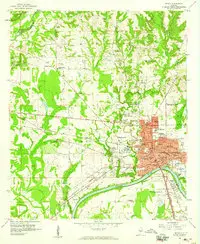
- USGS 1:24000-scale Quadrangle for Selma, AL 1958 — U.S. Geological Survey, 1958 · Public domain (USGS)
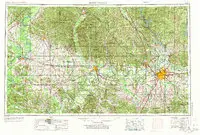
- USGS 1:250000-scale Quadrangle for Montgomery, AL 1953 — U.S. Geological Survey, 1953 · Public domain (USGS)
- "13 Alabama Ghosts and Jeffrey" (Commemorative Edition) — Alabama Public Radio (2014) — Alabama Public Radio (2014
- One of Alabama's most haunted historical cities — Alabama Tourism Department — Alabama Tourism Department
- Sturdivant Hall — Encyclopedia of Alabama — Encyclopedia of Alabama
- The Alabama Experience; The Ghosts of Selma — American Archive of Public Broadcasting — American Archive of Public Broadcasting (catalogue entry, page not loaded
- The Ghosts of Selma — Max Shores (producer's site, 2018) — Max Shores (producer's site, 2018
- Wikipedia article — Wikipedia · CC BY-SA 4.0
Text written by AI from the sources above and checked by a separate AI fact-check (how we work). Images: credits and licenses under each picture.
Spotted a mistake? Report an error