
Haunted place · Texas, United States
The Grove
Updated November 20267 sourcesHow to visit
- Protected heritage
- 2 archive documents
The Grove in Jefferson, Texas: an 1861 Greek Revival house tied to a Reconstruction-era killing, where a woman in white is said to walk through a wall.
The story
Known on official registers as the Stilley-Young House, The Grove is a Greek Revival home in Jefferson, a river town in Marion County, East Texas. It appears on the National Register and has been a Recorded Texas Historic Landmark since 2006 (marker #13675).
The land has a long paper trail. It first came from a grant to Daniel and Lucy Alley, among the founders of Jefferson. In June 1847 it was bought by Amos Morrill, a lawyer who became Texas's first federal judge; he put up a log cabin and used it as a base when his work brought him to town. While in Jefferson he took on the case of Harriet Potter, the common-law widow of Robert Potter, against her late husband's estate, which Wikipedia describes as one of the early women's rights cases in Texas. In March 1855 Morrill sold the lot to Caleb and Sarah Ragin.
On November 13, 1861, the cotton factor Frank Stilley and his wife, Minerva Fox Stilley, bought the property and built the house that came to be called The Grove. Minerva's father reportedly paid for it as a wedding present. An addition was made in 1870. Jefferson's prosperity depended on river traffic, and when the Great Raft, a huge natural log jam, was cleared and boats stopped coming, Stilley's business suffered. Minerva died in 1879, after which Frank moved to Weatherford and sold the house.
The house is also linked to a notorious episode of Reconstruction known as the Stockade Case. On the night of October 4, 1868, a mob of roughly 70 to 100 hooded men overwhelmed the guards at the local stockade and killed George W. Smith, who represented Marion County at the state Constitutional Convention, by shooting him where he was held. Lewis Grant and Richard Stewart, two Black men jailed with him, were dragged off to the woods and murdered; two others, Anderson Wright, who was wounded, and Cornelius Turner, got away. In August 1869, three of the attackers were found guilty of murder before a military commission. Some retellings say four Black men were shot or hanged along the street, but the Texas State Historical Association's Handbook of Texas records two killed and two survivors. Wikipedia states that the records of the military trial list The Grove among the sites involved, although the Handbook entry does not mention the house.
In the twentieth century the house belonged to another family. Their eldest daughter spent nearly her whole life there apart from four years at Bishop College in Marshall, where she trained as a teacher. She reportedly fitted strong locks to the interior doors and windows, kept the yard brightly lit, and, according to the ghost writers Robert and Anne Powell Wlodarski, often called the police about prowlers. She died in 1983 at the age of 96.
In January 1990, chef Patrick Hopkins bought the house, which he had found overgrown with vines and carrying a for-sale sign, and turned it into a restaurant. The present owners bought it in 2002.
The legend
Ghost books call The Grove the most haunted house in Jefferson, and possibly in the whole state. Those are claims made by the genre, not independent assessments, but the house does carry an unusually detailed set of stories.
The central figure is a woman, often identified as Minerva Fox Stilley, the first mistress of the house. Witnesses describe her walking alongside the building and then rising through an exterior wall. Inside, she is said to emerge from that wall and cross the house from one side to the other. Supporters of the story point out that her route makes sense in terms of the original layout: before the 1870 addition, that wall was the back porch, with a door that opened toward what would have been the children's bedroom. A neighbor and her sister also reported a "glowing white figure" on the porch, and Patrick Hopkins said he saw the woman inside just before he opened his restaurant.
Hopkins described a run of other events during his years there: mirrors dropping from walls, loud wailing from the upper floor, damp patches that appeared without explanation and a persistent sense of being watched. More general reports mention voices, footsteps and objects that move.
A second apparition is darker. Hopkins's niece and her friends said they spotted a Black man stretched out on the street, who vanished as they approached to help. The lore links him either to the victims of the Stockade Case or to a man said, by rumor only, to have been hanged from the back porch. We found no documentation for the hanging rumor, and the documented Stockade killings took place at the stockade (Smith) and in the woods (Grant and Stewart), not at the house. Wikipedia also quotes a legend that several murders happened in the area and that unmarked graves lie under or near the house; we found nothing in the record that confirms this.
The written stories appear in the 1990s, during the restaurant years, in two Texas ghost anthologies: A Texas Guide to Haunted Restaurants, Taverns, and Inns by Robert and Anne Powell Wlodarski, and Best Tales of Texas Ghosts by Docia Schultz Williams. The house's owners have also promoted its stories. In other words, much of the legend comes from people with a stake in it.
The house has had wide media exposure. According to Wikipedia, it appeared on HGTV's If Walls Could Talk, on William Shatner's Weird or What? in 2012 and on Penn & Teller: Bullshit!. This Old House listed it among the twelve most haunted houses in America, Texas Monthly among the eight scariest places in Texas, and Texas Highways covered it in October 1997 and again in October 2008. Specific episode details could not be confirmed, and no published skeptical analysis of the claims was found.
What remains today
The house survives as a private residence and a recognized landmark, with both its National Register listing and its state historical marker. Its Greek Revival design and the 1870 addition, which plays a role in the ghost story, are still part of the house. Jefferson itself keeps historic churches, bed-and-breakfasts and a Gone with the Wind museum.
Visiting
The Grove is a private home. In the past the owners have offered guided tours combining history and ghost stories, but whether these still run in 2026 could not be confirmed. As of November 2026 the house's official website was not responding, so confirm any tour before planning a trip, and do not enter the grounds without an invitation; if you pass by, look only from the public street.
Jefferson is a natural destination for anyone interested in haunted history: Texas Highways has described several ghost walks in town.
The ghosts
Restaurant-era disturbances
During his ownership from 1990, Patrick Hopkins reported mirrors falling, loud wails from upstairs, unexplained damp spots and a constant feeling of being watched. Voices, footsteps and moving objects are also reported generally.
- Moving objects
- Screams
- Voices
- Footsteps
First reported: 1990s. Reported by: Patrick Hopkins
Spirit
The vanishing man in the street
Said to be Linked by the lore to Stockade Case victims (1868) or to a rumored hanging on the back porch; we found no documentation for either link
Hopkins's niece and her friends said they spotted a Black man stretched out on the street who disappeared as they went to help. The supposed porch hanging is an undocumented rumor.
- Apparitions
First reported: 1990s. Reported by: Patrick Hopkins's niece and friends, via Wikipedia
The woman in white
Said to be Often identified as Minerva Fox Stilley, wife of the builder, who died in 1879
A woman is said to walk beside the house, step up through an outer wall and cross the interior; the wall was once the back porch before the 1870 addition. A neighbor and her sister described a "glowing white figure" on the porch, and restaurant owner Patrick Hopkins said he saw her before opening.
- Apparitions
First reported: 1990s. Reported by: Patrick Hopkins; a neighbor and her sister; Wlodarski and Williams ghost books
Photographs


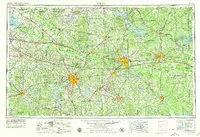
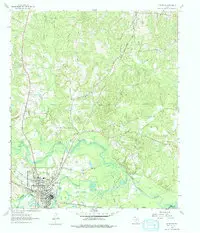
Old maps
Where it is
The circle shows the general area only. Open on the full map
Sources
- National Register of Historic Places file (NRHP #05001105) — U.S. National Park Service · Public domain (U.S. government)
- USGS 1:24000-scale Quadrangle for Jefferson, TX 1962 — U.S. Geological Survey, 1962 · Public domain (USGS)
- USGS 1:250000-scale Quadrangle for Tyler, TX 1956 — U.S. Geological Survey, 1956 · Public domain (USGS)
- "Haunted Jefferson" (Oct 2008) — Texas Highways (not read directly) — Texas Highways (not fetched, 403
- Official website
- "Stockade Case" — Handbook of Texas, Texas State Historical Association — Handbook of Texas, Texas State Historical Association
- Wikipedia article — Wikipedia · CC BY-SA 4.0
Text written by AI from the sources above and checked by a separate AI fact-check (how we work). Images: credits and licenses under each picture.
Spotted a mistake? Report an error