
Haunted place · Mississippi, United States
McRaven House
Updated November 20268 sourcesHow to visit
- Protected heritage
- 2 archive documents
McRaven House in Vicksburg, Mississippi: an antebellum home shelled in the 1863 siege, billed as the state's most haunted house and probed by parapsychologists.
The story
McRaven stands in Vicksburg, Mississippi, beside a railroad line on Harrison Street, the road once called McRaven Street that gave the house its popular name. On the National Register of Historic Places it appears under its Civil War-era name, the Bobb House, listed in 1979 after a 1978 nomination prepared by the Mississippi Department of Archives and History.
How old the house really is depends on whom you ask. Wikipedia and the house's own story credit Andrew Glass with building a first section around 1797, a kitchen with a single room above it, used as a stopping place for travelers heading along the Natchez Trace. That part is still called the "Pioneer Section." The 1978 nomination form tells a more cautious story based on deed books: the land belonged to an early settler named Anthony Glass, and the oldest surviving part of the house, a two-story brick rear ell in a conservative late Federal style, dates to about 1836. It says nothing of Glass building anything. The 1797 date and the Andrew Glass figure should therefore be treated as tradition rather than documented history.
Wikipedia adds that Sheriff Stephen Howard bought the house in 1836 and extended it, and that his wife, Mary Elizabeth Howard, died in childbirth in a middle bedroom in late August of that year. According to the deed records cited in the nomination, the house lot passed in 1837 to William Bobb, who likely put up the rear portion, then sold the enlarged property in 1844 for $5,000 to his brother, the planter John H. Bobb (1808-1864); Wikipedia gives 1849 for that sale. Family tradition credits John Bobb with the grand front wing of the 1850s, which pairs Greek Revival interiors with a showy local take on the Italianate. The 1860 census records him enslaving 22 people on the property.
During the 1863 Siege of Vicksburg the house served as a Confederate camp and field hospital, and because the railroad nearby was a focus of fighting, it took cannon fire from both armies. The following year brought a darker episode. On May 18, 1864, Bobb, angered by Black Union troops of the 46th U.S. Colored Infantry crossing his land, hurled a brick that struck Sgt. William Anderson in the head. Anderson fired and killed him. A court-martial cleared the sergeant of malice; he died that August at Milliken's Bend and lies among the unknown dead of Vicksburg National Cemetery. The nomination form describes Bobb as the first Vicksburg civilian killed amid tensions with the occupying Black troops.
Bobb's widow Selina sold the house in 1869. Machinist and inventor William Murray acquired it (in the early 1870s according to the nomination, in 1882 according to Wikipedia) and raised seven children there with his wife Ellen. William died in the house in 1911 and Ellen in 1921; a daughter died there in 1946 and a son in 1950. Two unmarried daughters then lived on alone with nothing modern but a telephone, until 1960. By then vines had swallowed the upper floor, neighbors had forgotten the house existed, and the sisters were reportedly burning antique furniture for heat. A new owner bought it that year and opened it to visitors in 1961; National Geographic dubbed it a "Time Capsule of the South" in 1963. After a 1979 sale, a year-long restoration of roughly $100,000 redid wiring, plumbing and the ornate plaster cornices and ceiling medallions.
The legend
McRaven is marketed as "the most haunted house in Mississippi," and its reputation is older than most television hauntings. David E. Roth included it in his 1996 Guide to Haunted Places of the Civil War, and by 1999 it was national news.
That year CBS's 48 Hours aired "Ghosts for Guests?" (August 5, 1999). The owner at the time described hearing a noise on the landing just before a drawer slammed shut on his thumbs. He said he had an exorcism carried out by people he hired from New Orleans, and that the spirits had been friendly ever since; he played "Dixie" to coax them out and said he had photographs of ghosts. Other visitors told the program that one woman had seen a Confederate soldier sitting in a chair, another had felt herself touched, and a man had been shoved from his seat by an unseen force. A photographer who had spent some twenty years chasing hauntings called it the liveliest place she had encountered.
The same program followed two parapsychologists from the State University of West Georgia, William Roll and Andrew Nichols, who spent Memorial Day weekend in the house. They recorded strong electromagnetic fields, which they put down to a natural source beneath the building, that is, an ordinary physical cause rather than a spirit. Nichols nonetheless concluded that McRaven was genuinely haunted.
Ghost Adventures returned the house to the screen in 2018 with a special for the Travel Channel, "Ghosts of Vicksburg: McRaven Mansion." The team focused on Andrew Glass, presented as a highwayman murdered by a jealous wife and as an aggressive presence in the house. Here the history pushes back: the nomination form names the early landowner Anthony, not Andrew, and offers no evidence of a 1797 house, a highwayman or a murder. That story is best read as tour lore. The soldiers, by contrast, have a historical anchor, since the grounds really were a Confederate camp and hospital.
The operators say the house's famous residents "never left" without naming them on their home page. Tour stories often point to Mary Elizabeth Howard, who died in childbirth, and to John Bobb, shot in 1864, but no reliable source confirms either as a named ghost. In October 2025 CNN Travel published a piece by a skeptical writer who joined a ghost hunt at McRaven and collected accounts from staff and guides.
What remains today
The house survives in three stages that you can read from the outside and inside: the early rear section, the 1836-era addition and the taller 1850s wing with its double-tiered front gallery. The 1978 nomination singled out the Greek Revival plasterwork as some of the finest in the Vicksburg area, including an anthemion-decorated frieze in the downstairs parlor and an unusually rich cornice and centerpiece in the main upstairs chamber. No outbuildings remain, but the old cisterns survive and brick walkways and terraces run through the shaded grounds. The nomination called it one of the most complete and best-preserved antebellum houses in the city. It operates as a tour home and museum.
Visiting
McRaven is open to the public as a tour home, run privately. The operators offer a roughly 45-minute history tour and a haunted tour of about an hour and a quarter led by a guide in period costume, along with private ghost investigations and scheduled investigation nights. Check the official McRaven Tour Home website for current details before you go. Outside organized visits the house and grounds are private property, so do not enter on your own.
Vicksburg makes a natural pairing: Vicksburg National Military Park and its national cemetery, where Sgt. William Anderson is buried among the unknowns, tell the larger story of the 1863 siege that left its mark on the house.
The ghosts
Spirit
Andrew Glass, the highwayman
Said to be Said to be Andrew Glass, builder of the first house c. 1797 and a highwayman murdered by his jealous wife; not supported by the NRHP record, which names an early landowner Anthony Glass
Ghost Adventures presented Glass as an aggressive spirit, a highwayman killed by his wife. The NRHP nomination dates the oldest part of the house to about 1836 and names the landowner Anthony Glass, so the tale looks like tour lore.
Reported by: Ghost Adventures (2018)
Confederate soldier in the chair
Said to be Linked to the Confederate camp and field hospital on the grounds during the 1863 siege
A woman told CBS she had seen a Confederate soldier sitting in a chair. The grounds served as a Confederate camp and hospital during the siege.
- Apparitions
First reported: By 1999. Reported by: CBS 48 Hours (1999)
Unidentified presence
The owner in 1999 said a drawer slammed on his thumbs after a noise on the landing and claimed ghost photographs; visitors reported being touched and a man said a force knocked him from his chair. An exorcism was reportedly performed, after which the spirits were said to be friendly.
- Moving objects
- Being touched
- Photographs
First reported: By 1999. Reported by: CBS 48 Hours (1999)
Old maps
Where it is
The circle shows the general area only. Open on the full map
Sources
- National Register nomination #79001337 (texte intégral) — U.S. National Park Service · Public record
- National Register of Historic Places file (NRHP #79001337) — U.S. National Park Service · Public domain (U.S. government)
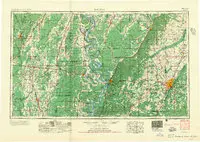
- USGS 1:250000-scale Quadrangle for Jackson, MS 1955 — U.S. Geological Survey, 1955 · Public domain (USGS)
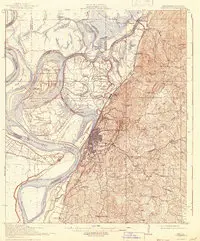
- USGS 1:62500-scale Quadrangle for Vicksburg, MS 1918 — U.S. Geological Survey, 1918 · Public domain (USGS)
- "Ghosts for Guests?" (5 Aug 1999) — CBS News 48 Hours — CBS News 48 Hours
- McRaven Tour Home (official site)
- NRHP Inventory–Nomination Form, "Bobb House / McRaven" (1978) — Mississippi Dept. of Archives and History / National Park Service — Mississippi Dept. of Archives and History / National Park Service
- Wikipedia article — Wikipedia · CC BY-SA 4.0
Text written by AI from the sources above and checked by a separate AI fact-check (how we work). Images: credits and licenses under each picture.
Spotted a mistake? Report an error