
Haunted place · Louisiana, United States
Myrtles Plantation
Updated November 202611 sourcesHow to visit
- As seen on Ghost Hunters
- As seen on Ghost Lab
- Protected heritage
- 3 archive documents
Myrtles Plantation, St. Francisville, Louisiana: a 1796 house sold as one of America's most haunted, whose famous Chloe legend has no known historical basis.
The story
The Myrtles stands near St. Francisville, in West Feliciana Parish, Louisiana. Its builder, David Bradford, known as General Bradford, was a well-off Pennsylvania judge and businessman, from Washington County, and one of the leaders of the Whiskey Rebellion of 1794. When the revolt against the federal whiskey tax collapsed, he fled the approaching federal army and headed down the Mississippi.
He was not arriving blind. The 1978 National Register nomination notes that he had already applied for land in Spanish Louisiana in 1792, had visited the St. Francisville area and had sold whiskey around New Orleans. He reached Bayou Sara in 1796 and the next year obtained a Spanish land grant of about 650 acres under Governor Baron de Carondelet. Wikipedia dates the house to 1796, the nomination to 1797. Bradford called the plantation Richland, and like its neighbors it was worked by enslaved people. Wikipedia points out that the published histories of the site say very little about the enslaved men and women who lived and labored there; much of what is told about them survives only in the ghost stories.
Bradford's daughter Sara Mathilda married Clarke Woodruff, a former law student of her father's. According to Wikipedia, Woodruff managed the plantation from 1817. In 1823-1824 yellow fever killed Sara Mathilda and two of the couple's three children, and in 1831 Woodruff left with his surviving daughter, Mary Octavia. The nomination tells a slightly different story, with Bradford's widow selling Richland to Woodruff in 1826 and his wife dying shortly afterward. In 1834 the property went to Ruffin Gray Stirling, whose wealthy family owned several plantations and a townhouse in Natchez.
Stirling renamed the estate The Myrtles and remodeled the house in the mid-nineteenth century: walls were moved, the cypress mantels went upstairs, and an addition nearly doubled the house, bringing a 16-foot entrance and stair hall, three more rooms and galleries on cast-iron supports. The grounds were terraced in 1850. After Stirling died in 1854 the plantation passed to his son and stayed in the family until 1894. In 1871 a man named William Winter was killed on the porch, perhaps, Wikipedia says, at the hands of one E. S. Webber. Many owners followed; the house declined during the twentieth century until restoration began in 1975, and it was listed on the National Register in 1978. In the 1970s and 1980s the owners of the time ran it as a bed-and-breakfast.
The legend
The Myrtles' haunted reputation is a well-documented phenomenon in its own right. One of the earliest written mentions is in Clarence John Laughlin's 1948 book Ghosts Along the Mississippi. A 1960 state commerce publication, Louisiana Plantation Homes, said the house was "popularly reputed to have at least one ghost." Heavy marketing followed, and the Myrtles came to appear in more ghost-hunting guidebooks than other plantations. The lore grew fastest during the bed-and-breakfast years: the National Enquirer crowned it America's most haunted house during the 1980s, and a 2013 brochure from the site described it as "One of America's Most Haunted Houses."
At the heart of the lore is Chloe (in some tellings Cleo), described as an enslaved woman whose spirit remains in the house; the evening tours recount stories of both Chloe and Cleo. The legend ties her to the deaths of Sara Mathilda Woodruff and her children. Those deaths were real, but the records point to yellow fever, and no historical person behind the Chloe story has been identified. The historian Tiya Miles, in Tales from the Haunted South (2015), argues that the Chloe and Cleo tales are at bottom stories of sexual, physical and ideological violence against Black women, built on the old Jezebel and Mammy stereotypes. The skeptic Joe Nickell also examined the Myrtles in Skeptical Inquirer in 2003.
Other stories have firmer roots. The killing of William Winter in 1871 is historical, and the tale goes that a murdered man's spirit still struggles up the staircase toward his wife; visitors report a drop in temperature on those stairs. Guests also describe children reflected in an old mirror, a Confederate soldier near the pond (a single source), and the shapes of an enslaved person and other figures along the old slave path.
Television has kept the reputation alive. Unsolved Mysteries filmed a segment in 2002. Ghost Hunters opened its second season here (aired July 27, 2005). The TAPS team explained the faces and hands in the mirror as "matrixing," the brain reading smudges and worn silvering as faces, but they also recorded a thermal anomaly on the staircase, an EVP in the dining room or ballroom and footage of a lamp moving on its own across a tabletop in what had been a slave cabin, which they could not account for, and in the end still ranked the Myrtles among America's most haunted places. The Klinge brothers, Brad and Barry, investigated with their group Everyday Paranormal in the Ghost Lab season premiere "Disturbing the Peace." Ghost Adventures followed in season 9, episode 2 (February 22, 2014), and the house appeared on Most Terrifying Places in America and in the second episode of Netflix's Files of the Unexplained (April 2024).
Miles's point is worth keeping in mind on any visit: at the Myrtles, the ghost stories are one of the few places where the plantation's enslaved residents appear at all, and the most famous of them is fiction.
What remains today
The house is a long, low frame building of one and a half stories with clapboard walls, set in landscaped grounds. Its front gallery stretches 107 feet across ten irregular bays, six from the original house and the rest from the 1850s addition, and galleries run along all sides, with ornate cast-iron supports patterned with vines and grapes at the front and sides. The 1978 nomination judged the interior the finest part: marble Rococo Revival mantels, lacy pierced plaster cornices and ceiling medallions that all differ, including a "Rococo-Gothic" design in the gentlemen's parlor. Most floors, windows, shutters and doors were considered original, as was the late eighteenth-century detached kitchen. Live-oak alleys, a pond, two cisterns and five stone cherubs representing the senses fill the garden. In August 2014 a fire badly damaged the General's Store, about ten feet from the main house, mostly in a 2008 extension; the house itself was untouched.
Visiting
The Myrtles is privately owned and run as a visitor attraction, so you can visit legally. Guided history tours of the main house run every day; Mystery Tours devoted to the ghost stories run every evening, and private versions can be booked. Guests can also spend the night, in the main house or in garden rooms and cottages. Check the official website for times, prices and bookings, and do not enter the grounds outside opening hours. If you take the ghost tour, consider pairing it with the daytime history tour and asking about the enslaved people who lived and worked here.
The ghosts
Children in the mirror
Faces and hands of children are reported in a mirror in the house. TAPS attributed them to matrixing: smudges and tarnished silvering read as faces.
- Apparitions
- Photographs
Reported by: Ghost Hunters S02E01 (2005)
Spirit
Chloe
Chloe is one of the two main figures of the ghost stories told on the plantation's evening Mystery Tours. Historian Tiya Miles describes the tale as fundamentally a story of violence against a Black woman. Our sources do not give the details of the legend.
Reported by: Myrtles Mystery Tours, as analyzed by Tiya Miles (2015)
Spirit
Chloe (or Cleo)
Said to be Said to be an enslaved woman; no historical person identified in the sources
The central figure of the evening Mystery Tours, linked by legend to the deaths of Sara Mathilda Woodruff and two of her children, who in fact died of yellow fever in 1823-1824. Tiya Miles argues that the Chloe and Cleo tales are at bottom about violence done to Black women, drawing on the Jezebel and Mammy stereotypes.
Reported by: Myrtles Mystery Tours; analyzed by Tiya Miles (2015)
Spirit
Cleo
Cleo is the second central figure in the tours' ghost stories. Tiya Miles links her story, like Chloe's, to violence against Black women and to the Mammy and Jezebel stereotypes. No further details are given in our sources.
Reported by: Myrtles Mystery Tours, as analyzed by Tiya Miles (2015)
Confederate soldier by the pond
Reported near the pond, according to one source only.
- Apparitions
Reported by: Syfy Ghost Hunters recap
Spirit
Enslaved figure on the grounds
Said to be Said to be an enslaved person
An enslaved person is said to wander the grounds, and figures are reported on the old slave path.
- Apparitions
Reported by: Syfy Ghost Hunters recap
Slave cabin presence
TAPS filmed a lamp moving on its own across a tabletop in what had been a slave cabin and could not explain it; they also recorded an EVP in the dining room or ballroom.
- Moving objects
- EVP recordings
First reported: 2005. Reported by: Ghost Hunters S02E01 (2005)
Spirit
The man on the stairs
Said to be Associated with William Winter, killed on the porch in 1871
According to the tale, a murdered man's spirit still struggles up the staircase toward his wife. Visitors report a temperature drop on the stairs, and TAPS recorded a thermal anomaly there.
- Footsteps
- Cold spots
Reported by: Ghost Hunters S02E01 (2005); site lore
Photographs


Old maps
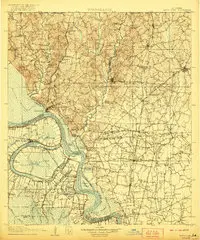
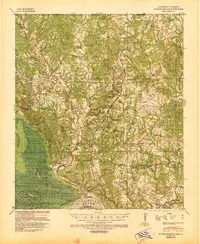
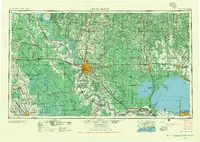
Investigated on TV
- Ghost Hunters · Season 2, episode 1 — “Myrtles Plantation”2005
- Ghost Lab — “Disturbing the Peace”
Where it is
The circle shows the general area only. Open on the full map
Sources
- National Register nomination #78001439 (texte intégral) — U.S. National Park Service · Public record
- National Register of Historic Places file (NRHP #78001439) — U.S. National Park Service · Public domain (U.S. government)
- Wikimedia Commons category : The Myrtles Plantation — Wikimedia Commons
- USGS 1:125000-scale Quadrangle for Bayou Sara, LA 1906 — U.S. Geological Survey, 1906 · Public domain (USGS)
- USGS 1:250000-scale Quadrangle for Baton Rouge, LA 1956 — U.S. Geological Survey, 1956 · Public domain (USGS)
- USGS 1:62500-scale Quadrangle for St. Francisville, MS 1939 — U.S. Geological Survey, 1939 · Public domain (USGS)
- "Episode Recap: Myrtles Plantation" — Syfy — Syfy
- "List of Ghost Adventures episodes" — Wikipedia — Wikipedia
- "List of Ghost Hunters episodes" — Wikipedia — Wikipedia
- official site — The Myrtles Plantation — The Myrtles Plantation
- Wikipedia article — Wikipedia · CC BY-SA 4.0
Text written by AI from the sources above and checked by a separate AI fact-check (how we work). Images: credits and licenses under each picture.
Spotted a mistake? Report an error