
Haunted place · New York, United States
Merchant's House Museum
Updated November 202610 sourcesHow to visit
- Protected heritage
- 14 archive documents
Merchant's House Museum, Manhattan: an 1832 NoHo townhouse kept intact by the Tredwells for a century, said to be haunted by Gertrude, who died there in 1933.
The story
Known variously as the Old Merchant's House, the Seabury Tredwell House or simply the Merchant's House Museum, this townhouse sits on the north side of East Fourth Street in Manhattan's NoHo, between Lafayette Street and the Bowery. Its claim to fame is simple and rare: it is described as the only nineteenth-century residence in Manhattan whose exterior and interior both survive intact.
The hatter Joseph Brewster built it in 1831-1832 as one house in a speculative row. It is a four-story brick rowhouse with a Federal-style front and a Greek Revival interior, and its National Register nomination attributes it to an architect recorded as Menard Lafever. In 1835 Brewster sold it to Seabury Tredwell, born in 1780 into a prominent Long Island family and descended from the Episcopal bishop Samuel Seabury. Tredwell had run a business on Pearl Street since about 1803 or 1804, later known as Tredwell, Kissam & Company (the nomination describes it as a thriving hardware import trade), and he retired the year he bought the house. He had married Eliza Parker in 1820. Wikipedia counts seven children; the museum counts eight. The nomination's portrait of him is famously unflattering: a prosperous man who was "neither brilliant nor celebrated," and who steered clear of social or political prominence. The family attended St. Bartholomew's Church a short walk away and spent summers at a country place in Rumson, New Jersey, which Tredwell reached by sailboat. He died in March 1865; according to the museum's own blog, his body lay in the front parlor for the wake, and the funeral took place in the double parlor.
Three of the daughters never left home. The youngest, Gertrude, was born in the house in 1840 and died there in 1933, aged 93. The house got electricity, running water and a furnace only around 1930, the year her nephew died. From then on few people called, and Gertrude's life ended in a second-floor bedroom with no one beside her. A New York Times reporter later summed her up as a gentle recluse "hemmed in by ugliness." In the nomination's phrase, she "changed nothing and kept everything," which is why the furniture, nearly all bought before 1860, and the family's dresses survived along with the rooms.
The house then stood empty for several years, still full of belongings. A relative wanted to sell house and contents to clear the mortgage, but on the night before the public auction a Tredwell relative (distant, according to Wikipedia; a grand-nephew, according to the nomination) bought it and paid off the debt. His Historic Landmark Society opened it as the Old Merchants' House on May 11, 1936. Money stayed scarce: a 1943 drive for $100,000 brought in only $7,000 in two years, and a caretaking couple made their home in the basement, where the woman stayed until she died in 1954. When a sale was again floated in 1965, protests followed, and that October the Landmarks Preservation Commission made the house one of New York City's first official landmarks.
Architect Joseph Roberto restored the building from 1970 to 1980. In 1990-1991, once demolition work on neighboring lots had damaged the structure, the museum spent $600,000 on stabilization and reopened in December 1991. In the 2010s and 2020s the museum fought a hotel project next door, warning that vibrations could cause "irreparable" harm. In early 2026 a hidden shaft between the parlors was rediscovered and is now thought to have been an Underground Railroad hiding place built by Brewster, although a 1981 landmarks report had dismissed that idea.
The legend
The ghost of the Merchant's House has a name: Gertrude Tredwell. After her lonely death the shuttered house, full of her family's possessions, quickly gained a reputation, and visitors claimed she was still there. The museum states that staff, volunteers, visitors, neighbors and passers-by have reported sounds, sightings and smells ever since it opened as a museum in the 1930s. It gives no dated incidents or named witnesses on its ghost page. By its count, a minimum of eight people died under this roof, without naming them, and uses this to account for presences other than Gertrude. Seabury Tredwell, laid out in the front parlor in 1865, is the obvious candidate, but the museum's own history blog does not call him a ghost.
The press trail is unusually long. The earliest known article is a Meyer Berger column in The New York Times on November 27, 1953, whose title wondered whether the old house near the Bowery might be haunted. Berger came back to the subject in February 1956. The New York Daily News ran "The Spinster Spook" in 1974, and the Times followed Gertrude's trail again in a 1998 article by Corey Kilgannon and in a 2006 piece on the house's ghost tours. What witnesses these articles quoted is not documented here, since only their titles are on record. The caretakers who lived downstairs from 1936 would have been natural early witnesses, but no account from them has surfaced.
Today the museum embraces the legend openly. Its marketing calls it "Manhattan's Most Haunted House," a tagline it credits to The New York Times, and it argues that the paranormal activity is a "very likely reality"; that last is its own claim. Paranormal investigator Dan Sturges, who has appeared on Paranormal Caught on Camera (Travel Channel), has worked in the house since 2007. During the 2020 pandemic closure the museum launched its own research program with Sturges and a neuroscientist identified only as Dr. Lee, using purpose-built equipment, and its video podcast is called In the Spirit of Science. It also sells a booklet of the house's ghost stories and invites visitors to email their experiences. No independent skeptical study of the house is known, so the case rests largely on the museum's own reporting.
What remains today
A stoop with iron grillwork leads to a front door framed by Ionic columns and an arch with a fanlight. Inside, the original plan survives. The ground floor holds the old family room, presented as a children's playroom, and a kitchen with a massive fireplace and built-in Dutch ovens. On the main floor, a double parlor is divided by sliding doors set in an arched opening flanked by Greek columns, with ornate cornices and fireplaces of black marble. The second floor has master bedrooms with matching carved four-poster beds, the third the children's rooms, and the top floor four servants' rooms under a slate roof. An 1850 frame addition opens onto a small rear garden. The collection holds more than 4,500 Tredwell objects, from furniture and table settings to clothing and personal items. Both facade and interior are New York City landmarks, and the building holds National Historic Landmark status.
Visiting
The museum welcomes the public with tours, educational programs, performances and events; check merchantshouse.org for current details. A $5.2 million exterior renovation began in mid-2025, and visitors were routed through the rear garden while the front door was closed, so confirm the entrance before you go.
For ghost hunters, the museum runs its own Candlelight Ghost Tours each October. In 2026 they ran on October 16-17, 23-24 and 29-30: 50-minute tours leaving every half hour from 6:30 to 9 pm, at $45. A later, 90-minute tour led by Dan Sturges started at 9:30 pm for $70, and private group ghost tours can be booked. Since 2006 the tours have included short scenes about members of the family.
The ghosts
Gertrude Tredwell
Said to be Gertrude Tredwell (1840-1933), youngest Tredwell child, who lived her whole life in the house and died alone in a second-floor bedroom aged 93
Soon after her death in 1933 the empty house, still full of family belongings, was said to be haunted by her. Many people believe she has never left and keeps watch over her home; the legend has run through the press from 1953 to the present.
- Apparitions
- Voices
- Smells
First reported: 1930s (museum); in print by 1953 (New York Times). Reported by: Meyer Berger (New York Times, 1953, 1956); New York Daily News (1974); New York Times (1998); Merchant's House Museum; Dan Sturges
Spirit
Unnamed residents
Said to be Attributed by the museum to the at least eight people who died in the house (unnamed)
According to the museum, staff, volunteers, visitors and neighbors have reported noises, sightings and odors, some of which it links to other people who died in the house. No names or dated incidents are given.
- Voices
- Smells
- Apparitions
First reported: Since the 1930s (museum). Reported by: Merchant's House Museum
Photographs


From the archives


Old maps
Where it is
The circle shows the general area only. Open on the full map
Sources
- National Register nomination #66000548 (texte intégral) — U.S. National Park Service · Public record
- National Register of Historic Places file (NRHP #66000548) — U.S. National Park Service · Public domain (U.S. government)
- Wikimedia Commons category : Merchant's House Museum — Wikimedia Commons
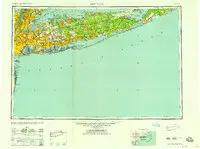
- USGS 1:250000-scale Quadrangle for New York, NY 1958 — U.S. Geological Survey, 1958 · Public domain (USGS)
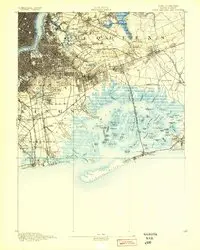
- USGS 1:62500-scale Quadrangle for Brooklyn, NY 1889 — U.S. Geological Survey, 1889 · Public domain (USGS)
- "About New York: There's Still a Ghost of a Chance…" (Meyer Berger, 27 Nov 1953) — The New York Times (not read directly) — The New York Times (not readable, title only
- "Ghosts" / 2026 Candlelight Ghost Tours — Merchant's House Museum (official) — Merchant's House Museum (official
- "Meet the Tredwells: Seabury Tredwell, Part 4 – The End of an Era" (10 Oct 2019) — Merchant's House Museum — Merchant's House Museum
- Official website
- Wikipedia article — Wikipedia · CC BY-SA 4.0
Text written by AI from the sources above and checked by a separate AI fact-check (how we work). Images: credits and licenses under each picture.
Spotted a mistake? Report an error