
Haunted place · New York, United States
Alice Austen House
Updated November 202610 sourcesHow to visit
- Protected heritage
- 9 archive documents
Clear Comfort, photographer Alice Austen's harborside Staten Island home, where an 1895 article recorded tales of cellar chains and a British soldier's spurs.
The story
Clear Comfort is a small cottage on the edge of New York Harbor in the Rosebank neighborhood of Staten Island, facing the Narrows. Its oldest part was a one-room Dutch Colonial farmhouse built in the late 17th or early 18th century; the date is debated, with Wikidata giving 1690 and other references placing it later. The brothers Jacob, Lambert and John Woulter (also written Johnson), who bought 120 acres from George Brown in 1698, were probably the first to live here. One curious detail from Wikipedia: Jacob's mother-in-law, Winifred King Benham, had faced a witchcraft trial in Wallingford, Connecticut; she may have come to live in the house after she was acquitted and all but driven out of her town.
The 1970 National Register nomination traces the growth of the building. A room, hall and large fireplace were added at the south end before 1730, and a stone wing at the back, probably first a freestanding kitchen, went up before the Revolution and was later attached. In 1835 Daniel Low bought the farm for $10,000 as part of a real estate scheme, the Staten Island Association, which split the land into lots and laid out roads. An 1878 article in the Richmond County Gazette already called the house "an old landmark".
On October 10, 1844, John Haggerty Austen bought the house and half an acre for $2,500, later enlarging the plot to about an acre. He renamed it Clear Comfort and turned the plain farmhouse into a Carpenter Gothic cottage; family tradition credits the architect James Renwick with the redesign. A new north room gave the house its T-shaped plan, and the family settled here permanently in 1852.
His granddaughter, Elizabeth Alice Austen (1866 to 1952), arrived as a small child in 1867 and stayed for most of her life. Introduced to photography in the early 1880s, she became, in the words of the nomination, one of the great early amateur photographers. She shared the house with her companion Gertrude Tate for about thirty years. Austen lost her money in the 1929 crash, and in 1945 the two women were evicted; Austen ended up at the Staten Island Farm Colony, the borough's poor farm. Her photographs and negatives, kept at the Staten Island Historical Society, were rediscovered shortly before her death and brought her belated fame.
In the 1950s and 1960s a group led by the photographer Berenice Abbott and Philip Johnson campaigned to save the house from demolition. It joined the National Register in 1970 and became a city landmark in 1971, according to the body of Wikipedia's article; its infobox gives August 2, 1967. New York City bought it in 1975, restored it between January 1984 and April 1985 at a cost of $1.05 million, and opened it as a museum in 1985. It became a National Historic Landmark in 1993, a Historic Artist Home and Studio in 2002, and a national site of LGBTQ significance in 2017. In 2021 the LGBT Historic Sites project documented Clear Comfort, the first New York City site dedicated to a woman to receive that recognition.
The legend
Clear Comfort's ghost stories are old, few and modest, and they come down to us through a single printed source. Wikipedia cites an 1895 article titled "Haunted Houses" by Cromwell Childe in The American Magazine, published in New York by Frank Leslie's house. Wikipedia, citing the 1895 article, calls them an old neighborhood tradition, so they are at least that old. The original article was not consulted for this page.
The first tradition concerns the cellar. Neighbors said that after midnight you could hear chains clanking down there, and they put it down to the ghosts of enslaved people supposedly kept chained below the house in Revolutionary times. No source we found documents who, if anyone, was actually confined there, so the story is perhaps best read as a memory of the colonial past, and of slavery in New York, passed on as a ghost tale.
The second story is one that Wikipedia itself labels apocryphal. A British soldier, heartbroken, is supposed to have hanged himself from a beam in the parlor. Those who repeat the tale say that after midnight his boots and the jingle of his spurs can be heard in that room.
That is the full extent of the haunting in our sources. There are no modern sightings, no named witnesses, no paranormal investigations and no television coverage. No source claims that Alice Austen's own ghost lingers here. The museum's home page and the Historic House Trust do not mention ghosts at all; the museum's programs focus on photography and LGBTQ history. These are 19th-century neighborhood legends, and they should be enjoyed as such.
What remains today
The house is a one-and-a-half-story wooden cottage, T-shaped in plan, with white clapboard walls on a fieldstone foundation and a stone rear wing. The 1970 nomination describes dormers with diamond-paned windows and decorative scrollwork bargeboards, a six-bay front porch whose posts are made of open X-shaped latticework, and stone chimneys at both ends. At that time part of John Austen's land still surrounded the house, and the nomination praised the setting, together with the neighboring former yacht club house, as one of the rare surviving pastoral landscapes in New York City, facing straight onto the Verrazano Narrows. The building has also been documented by the Historic American Buildings Survey.
The Friends of Alice Austen House now operate it as a museum, in partnership with the city parks department, within the Historic House Trust network.
Visiting
Clear Comfort is a public museum and can be visited during opening hours, which in November 2026 were Wednesday to Friday from noon to 4 pm and Saturday from 11 am to 4 pm; check the official website before going, as hours and exhibitions change. It is a photography and history museum rather than a ghost attraction, and no ghost tours or Halloween events are listed on the museum's site. The real reward is Alice Austen's work and the harbor view she photographed for decades.
The ghosts
The chains in the cellar
Said to be Said by neighborhood tradition to be enslaved people held in the cellar during the American Revolution
Neighbors said chains could be heard clanking in the cellar after midnight, and attributed the sound to enslaved people supposedly kept there during the Revolution. No record of such confinement was found.
First reported: 1895 (Cromwell Childe, The American Magazine), called an old tradition by Wikipedia. Reported by: Neighborhood tradition, recorded by Cromwell Childe (1895)
The heartbroken British soldier
Said to be A British soldier said to have hanged himself from a parlor beam
An apocryphal story says a lovesick British soldier hanged himself in the parlor. His boots and the clink of his spurs are said to be heard there after midnight.
- Footsteps
First reported: 1895 (Cromwell Childe, The American Magazine). Reported by: Local tradition, recorded by Cromwell Childe (1895)
Photographs


From the archives


Old maps
Where it is
The circle shows the general area only. Open on the full map
Sources
- National Register nomination #70000925 (texte intégral) — U.S. National Park Service · Public record
- National Register of Historic Places file (NRHP #70000925) — U.S. National Park Service · Public domain (U.S. government)
- Wikimedia Commons category : Alice Austen House — Wikimedia Commons
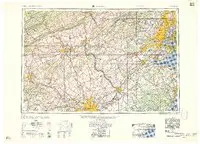
- USGS 1:250000-scale Quadrangle for Newark, NJ 1957 — U.S. Geological Survey, 1957 · Public domain (USGS)
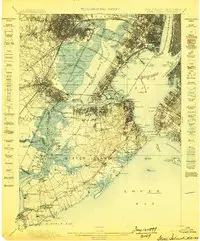
- USGS 1:62500-scale Quadrangle for Staten Island, NJ 1898 — U.S. Geological Survey, 1898 · Public domain (USGS)
- "Alice Austen House" — Historic House Trust of New York City. — Historic House Trust of New York City.
- Alice Austen House Museum — official site (home page and past events). — official site (home page and past events).
- "Home & Museum" — Alice Austen House Museum (official site). — Alice Austen House Museum (official site).
- Official website
- Wikipedia article — Wikipedia · CC BY-SA 4.0
Text written by AI from the sources above and checked by a separate AI fact-check (how we work). Images: credits and licenses under each picture.
Spotted a mistake? Report an error