
Haunted place · New York, United States
Belasco Theatre
Updated November 20267 sourcesHow to visit
- Protected heritage
- 6 archive documents
Broadway's 1907 Belasco Theatre in Manhattan, where actors say impresario David Belasco watches from a box on opening nights, joined by a misty Blue Lady.
The story
In the first two decades of the twentieth century, New York's theater world migrated north from Union Square and Madison Square toward Times Square, and forty-three new playhouses went up around Broadway in Midtown between 1901 and 1920. One of them was built for a producer who wanted to control every detail of what audiences saw: David Belasco, born in San Francisco in 1853.
Belasco had been running Oscar Hammerstein's Republic Theatre on 42nd Street since 1902. He was famous for his obsession with stage lighting, frequently pouring more time and money into lighting rehearsals than into all of a production's other costs combined, and by the mid-1900s he wanted a house built to his own specifications. Developed by Meyer R. Bimberg and designed by architect George Keister, the new theater on West 44th Street opened on October 16, 1907, as the Stuyvesant Theatre, with A Grand Army Man as its first show.
In 1909 Belasco added a ten-room duplex above the eastern wing, reached by its own small private elevator, with a living room under a 30-foot ceiling. Decorated like a Gothic church, it became a cabinet of curiosities: ancient glass, a Napoleon room that included a lock of the emperor's hair, a Japanese-style bedroom, and a hidden Gothic chamber holding medieval art and erotica. One biographer described the whole place as a bewildering heap of collectors' treasures. On September 17, 1910, Belasco gave the theater his own name. Early successes included The Concert and The Return of Peter Grimm, and in 1914 Molnar's The Phantom Rival pioneered the trick of blacking out the stage for scene changes instead of lowering the curtain.
Belasco died in Manhattan on May 14, 1931. His collection was dispersed: Sardi's restaurant took some pieces for its Belasco Room, the New York Public Library received books, and most of the rest went to auction. The theater was then leased by actress Katharine Cornell, and in August 1934 Hazel Rice, wife of playwright Elmer Rice, bought it. It was sold in 1948 to the company that still runs it, served as an NBC broadcast studio for several years, and returned to live theater in 1953. The quality of its bookings slipped in the late twentieth century, when it hosted the nude revue Oh! Calcutta! from 1971 and The Rocky Horror Show in 1975, but it never stopped presenting plays and musicals. After renovations in the 1920s and 1970s, a major restoration was completed and the house reopened on October 2, 2010. Productions of recent decades include Follies (2001), Awake and Sing! (2006), Passing Strange, and Joe Turner's Come and Gone (2009), and the 2014 revival of Hedwig and the Angry Inch.
The legend
The Belasco's chief ghost is the man whose name is over the door, and his story is one even the theater's operator acknowledges: its own history notes that after his death the building was rumored to be haunted by him. The stories therefore date from after 1931.
As actors and stagehands tell it, Belasco still comes to his openings. He is said to appear in clothing that looks clerical and to sit in an empty box on a production's first night. Several performers have said the figure tried to talk to them. Other reports are less visual. A caretaker said he heard the chains of Belasco's private elevator rattling long after it had fallen out of use, and others describe that elevator moving with no one in it, footsteps with no source, and doors and curtains shifting on their own.
A second ghost, known as the "Blue Lady," takes the form of what witnesses call an "icy cold blue mist." Tradition makes her an actress who plunged to her death down an elevator shaft. This story rests on a single source, and no name, date or record of such an accident has been found, so it is best treated as theater folklore.
The legend has a sense of humor. Belasco's ghost supposedly stopped showing up after Oh! Calcutta! moved into his theater, as though the old showman could not bear it. By the 2000s, people said he was back. The New York Times ran a piece titled "The Phantom of the Belasco: A Tale" in 1995, and The New Yorker followed with "A Broadway Haunt" in 2006. The ghost even entered a script: during the 2014 run of Hedwig and the Angry Inch, Hedwig told audiences about the building and its haunting, announced that a show is blessed if Belasco appears on its opening night, and asked people in one of the boxes to keep watch for him.
No paranormal television investigation or skeptical study of the theater was found. The Belasco's haunting lives mainly in the oral tradition of Broadway.
What remains today
The Belasco is a working Broadway house, with 1,016 seats according to Wikipedia and a total capacity of 1,059 including standing room according to its owner, on three levels: an orchestra at street level, then two balconies projecting above it, the higher one lined with boxes. Both its facade and its interior are designated New York City landmarks. The 44th Street front is red brick laid in Flemish bond with terracotta ornament, its asymmetrical upper floors topped by a pediment. Inside, the auditorium keeps its Tiffany light fittings and ceiling panels, its lavish wood paneling, and a series of eighteen murals by the American painter Everett Shinn. Belasco's offices occupied the western wing; his duplex still crowns the eastern wing, although some of its decoration was removed in the 1980s and air ducts were later installed there.
Visiting
The only way to see inside the Belasco is to buy a ticket to the current production; the theater's official listing gives the show and schedule. Backstage areas, the old elevator and Belasco's apartment are not part of a normal visit, so do not expect to see them.
If you want to test the legend, watch the boxes, and an opening night is the occasion when Belasco is supposed to appear. Walking tours of Broadway history and ghosts may include the theater, but check what a tour actually covers before booking. Sardi's, which received part of Belasco's collection after his death, is another stop for anyone following his story through the Theater District.
The ghosts
Spirit
David Belasco
Said to be David Belasco (1853-1931), producer who built and lived above the theater
Performers and stage crews tell of a priestly-looking figure occupying an unsold box on first nights, at times attempting to address the actors. He supposedly stopped appearing after Oh! Calcutta! arrived in 1971 and was said to be back by the 2000s. Rattling elevator chains, a moving disused elevator, footsteps and shifting doors and curtains are also linked to him.
- Apparitions
- Voices
- Footsteps
- Doors opening
- Moving objects
First reported: after 1931. Reported by: Actors and backstage staff; a caretaker; New York Times (1995); The New Yorker (2006)
The Blue Lady
Said to be Said to be an actress who fell to her death down an elevator shaft
A second ghost seen as a cold, bluish mist. Tradition makes her an actress who plunged down an elevator shaft, but no name, date or record has been found.
- Apparitions
- Cold spots
Photographs


From the archives


Old maps
Where it is
The circle shows the general area only. Open on the full map
Sources
- Wikimedia Commons category : Belasco Theatre — Wikimedia Commons
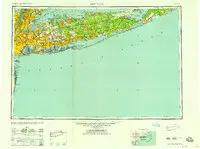
- USGS 1:250000-scale Quadrangle for New York, NY 1958 — U.S. Geological Survey, 1958 · Public domain (USGS)
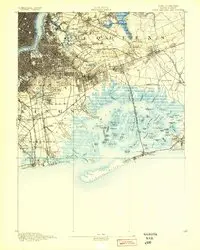
- USGS 1:62500-scale Quadrangle for Brooklyn, NY 1889 — U.S. Geological Survey, 1889 · Public domain (USGS)
- Belasco Theatre — The Shubert Organization (official owner) — The Shubert Organization (official owner
- David Belasco — Wikipedia — Wikipedia
- Official website
- Wikipedia article — Wikipedia · CC BY-SA 4.0
Text written by AI from the sources above and checked by a separate AI fact-check (how we work). Images: credits and licenses under each picture.
Spotted a mistake? Report an error