
Haunted place · California, United States
Winchester Mystery House
Updated November 202616 sourcesHow to visit
- As seen on Ghost Hunters
- Protected heritage
- 5 archive documents
Sarah Winchester's 160-room San Jose mansion, built for decades until 1922: the facts behind the rifle-ghost legend, the TV visits and the tours today.
The story
The Winchester Mystery House stands in San Jose, Santa Clara County, California. Its builder was Sarah L. Winchester, born Sarah Pardee, who married William Wirt Winchester, son of the maker of the Winchester Repeating Rifle, on September 30, 1862. Their only child, Annie Pardee, was born on June 15, 1866, and died on July 24 of that year. William died on March 7, 1881.
The wealthy widow moved to California and purchased an eight-room farmhouse, from John Hamm according to Wikipedia (the 1974 nomination names a Dr. Caldwell), in what is now San Jose. The 1974 National Register nomination dates the start of her building campaign to 1884; some accounts give 1886. Either way, the additions went on for decades, until Sarah died on September 5, 1922, at the age of 83, leaving a rambling house of roughly 160 rooms on the southeast part of an estate that once covered about 162 acres.
In New Haven, she and William had already become interested in architecture and decoration when they built a house of their own on Prospect Hill. In San Jose she hired at least two architects, dismissed them, and planned the work herself, room by room, consulting her carpenters. Writer Colin Dickey, in Ghostland: an American History in Haunted Places, argues that a woman running a project of this size was rare enough to make her a kind of architectural pioneer.
The nomination describes a light wood-frame Victorian house on brick and concrete foundations, with two basements, a crowd of roofs and a busy mix of shingles, siding, cornices and ornament. Its author summed it up as "an outstanding example of Victorian construction, complete with the inevitable accidents of unrestricted and unchecked growth." The 1906 earthquake did serious damage, and the wrecked parts were not rebuilt.
Guides long credited the beveled windows to Tiffany & Co., which seldom worked that way. Architectural historian Jim Wolf noticed matching windows at Craigdarroch Castle in British Columbia and named glass artist John Mallon, of Alexander Dunsmuir's Pacific American Decorative Company, as the likely maker. Restorers later found inside a dining-room wall an envelope with that company's seal, postmarked July 1894 and bearing a note that appears to be in Sarah's hand. Two windows near a brick fireplace carry lines from Shakespeare's Richard II and Troilus and Cressida, and many panes she bought were never installed.
Nine months after her death the house became a paid attraction, opening in 1923 with Mayme Brown as its first guide. Harry Houdini stopped by briefly in late October 1924 during a lecture tour against spiritualism; he did not investigate, but Vanity Fair credited him with suggesting the name "Winchester Mystery House," a phrase that already existed and soon appeared in official advertising. When Keith Kittle, formerly of Disneyland and Frontier Village, became general manager in 1973, the building was in poor shape. Over the next two decades he restored it, added a museum of Winchester rifles, sought landmark status and put up highway billboards with a silhouetted house that hinted at ghosts. National Register listing followed in 1974, and the house is also California Historical Landmark No. 868. It also inspired Disney's Haunted Mansion (1969), and the 2018 film Winchester, starring Helen Mirren, was shot on site.
The legend
The core story says Sarah kept building to appease, or to confuse, the spirits of people killed by Winchester rifles, who were blamed for the deaths of her husband and baby; stop building, the tale goes, and she would die. The idea is older than the tourist attraction. In 1895 a San Jose newspaper ran a piece headlined "Strange Story: A Woman Who Thinks She'll Die When Her House Is Built," the earliest known source for the build-or-die notion, and a 1908 San Francisco Examiner article about a possible sale of the property mentioned a haunting. By December 17, 1925, a piece in the New Britain Herald of Connecticut had her building "for the spirits," with "ghostly guests and masters" playing in her music room. The medium who supposedly gave the order came much later. The oldest version with a seer we found is in the Evening Star of Washington on May 9, 1948, where she fears "the ghosts of people who had been killed by his rifles" and a fortune-teller says she is safe "as long as the sound of a hammer could be heard around her house." A Boston psychic named Adam Coons enters the story only in 1967, in Susy Smith's book Prominent American Ghosts. Scholar Emily Mace and others checked the spiritualist paper Banner of Light and the Boston city directories and found no one of that name.
Other famous details are also late additions. The obsession with the number thirteen (thirteen bathrooms, thirteen windows) first shows up in a 1929 magazine piece, "The Strangest House in the World" in Wide World Magazine; James Perkins, a carpenter who worked there for years, stated in 1983 that those features were added after her death. The story of nightly séances in the Blue Room fails too: her staff said séances never interested her, and records show the room was the head gardener's bedroom. Her companion of many years, Henrietta Severs, said Sarah was not superstitious. Historian Mary Jo Ignoffo, in Captive of the Labyrinth (2010), found no evidence that she felt compelled to build; work often stopped for months, and the odd features follow from the 1906 damage, shifting plans and the arthritis that afflicted her. Doors that open onto nothing date from the quake, barred interior windows were once outside windows, the very low steps eased her joints, trap doors drained a greenhouse room, and the tower bell called workmen and served as a fire alarm. Brian Dunning of Skeptoid (2022) traces the myths partly to local resentment of a rich, private outsider. Former guides have said their scripts once included things that were not true.
Joe Nickell, writing in Skeptical Inquirer in 2002, dismantled two more tales: the "ghostly music" neighbors heard was most likely Sarah playing the ballroom pump organ when she could not sleep, and the banquets for spirits on gold plates never happened; the safe, once opened, held keepsakes and a lock of her daughter's hair.
None of this stops current reports. Visitors and guides describe cold spots, footsteps, whispers, cooking smells and slamming doors and windows. Accounts given to the TAPS team mention the organ playing in the Grand Ballroom, sudden cold or warmth in the Daisy Bedroom, and knocking plus an unexplained odor in the ballroom and basement; a man in coveralls has been described near the basement boiler (popular retellings call him "Clyde," a name that remains unconfirmed). The attraction itself calls the basements infamous for reported activity and markets Sarah's "former (and perhaps current!)" presence. Nickell found no evidence of a haunting, pointing to suggestion, publicity, drafts and settling, and noted that one shadowy "ghost" turned out to be an employee.
Television has come often. Ghost Hunters (TAPS) covered the house in season 2, episode 11 (October 5, 2005), alongside the Queen Mary, without conclusive results. Most Haunted Live! visited in 2007. Ghost Adventures filmed there in season 5, episode 4 (October 14, 2011), a lockdown cut short when Zak Bagans learned his grandmother had died that night; the team returned for "Return to Winchester Mystery House" (season 12, episode 11, 2016) and "The Houdini Seance" (season 29, episode 1, April 2025).
What remains today
The mansion survives on its original site, on a far smaller parcel than Sarah's estate. Visitors move through its corridors, stairs that end at ceilings, the bell tower, a doorway that opens onto empty air, the art-glass windows and the two basements. When the house was nominated in 1974, the operators described a restoration aimed at returning it to its appearance in her lifetime, including repairs for earthquake, weather and vandal damage.
Visiting
The house is a commercial attraction open to the public. The operator runs a 65-minute Mansion Tour covering about 110 of the 160 rooms, add-on tours of the basement and attic, after-hours flashlight tours (including Friday the 13th editions), a Halloween "Fright Nights" maze and a Victorian tea that includes a séance. On set dates it also hosts six-hour paranormal investigations with the YouTube channel Haunted Nights. Schedules, prices and booking are on the official website, winchestermysteryhouse.com.
The ghosts
Servant or worker
Man in coveralls
Said to be Unidentified workman; popularly called "Clyde" (name unconfirmed)
A man in coveralls has been described near the boiler in the basement. Guides in popular retellings call him Clyde, but that name remains unconfirmed.
- Apparitions
Reported by: Syfy Ghost Hunters recap (2005)
Spirit
Phantom organ music
Said to be Explained by Nickell as Sarah Winchester playing the ballroom pump organ
Neighbors spoke of ghostly music. Nickell believes they were hearing Sarah playing the pump organ in the Grand Ballroom on sleepless nights.
- Phantom music
First reported: During Sarah Winchester's lifetime. Reported by: Local residents; Joe Nickell
Sarah Winchester
Said to be Sarah L. Winchester (died 1922)
The attraction markets the house around Sarah's former, and perhaps current, presence. No specific sighting of her has been documented.
Reported by: Winchester Mystery House (official site)
Shadow figure
Shadowy figure
Said to be A staff member, according to Joe Nickell
A dark figure taken for a ghost turned out to be a member of staff, Joe Nickell reports. It is a debunked case.
- Apparitions
Reported by: Joe Nickell (Skeptical Inquirer, 2002)
Spirit
Spirits of those killed by Winchester rifles
Said to be Victims of Winchester firearms, according to the legend
Legend says Sarah Winchester built nonstop to appease or confuse these spirits, blamed for the deaths of her husband and daughter. The build-or-die idea appears in an 1895 San Jose article; the Boston medium Adam Coons appears only in Susy Smith's 1967 book, and no record of him exists. Historian Mary Jo Ignoffo found no evidence she felt forced to build.
First reported: 1895 (build-or-die idea); a fortune-teller by 1948; Adam Coons 1967. Reported by: San Jose newspaper (1895); Susy Smith, Prominent American Ghosts (1967); disputed by Mary Jo Ignoffo, Joe Nickell, Skeptoid
Spirit
Unseen presences of the mansion
Visitors and guides report cold spots, footsteps, whispers, cooking smells and slamming doors; the TAPS team heard of the ballroom organ playing, odd temperatures in the Daisy Bedroom and knocking in the basement. Joe Nickell attributes such reports to suggestion, drafts and settling.
- Cold spots
- Footsteps
- Voices
- Smells
- Doors opening
- Phantom music
Reported by: Visitors and tour guides; Ghost Hunters (2005); examined by Joe Nickell
Photographs


From the archives


Old maps
Investigated on TV
- Ghost Hunters · Season 2, episode 11 — “RMS Queen Mary”2005
Where it is
The circle shows the general area only. Open on the full map
Sources
- National Register nomination #74000559 (texte intégral) — U.S. National Park Service · Public record
- National Register of Historic Places file (NRHP #74000559) — U.S. National Park Service · Public domain (U.S. government)
- Wikimedia Commons category : Winchester Mystery House — Wikimedia Commons
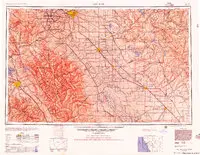
- USGS 1:250000-scale Quadrangle for San Jose, CA 1956 — U.S. Geological Survey, 1956 · Public domain (USGS)
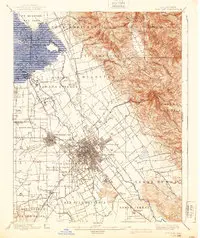
- USGS 1:62500-scale Quadrangle for San Jose, CA 1889 — U.S. Geological Survey, 1889 · Public domain (USGS)
- Magazine piece on Mrs. Winchester and her house, New Britain Herald, December 17, 1925 — New Britain Herald
- Superstition Causes Rifle Inventor's Wife to Build Odd House, Evening Star, May 9, 1948 — Evening Star
- "Demystifying the Winchester Mystery House" — Skeptoid (Brian Dunning, 22 Mar 2022) — Skeptoid (Brian Dunning, 22 Mar 2022
- "Episode Recap: RMS Queen Mary" (includes Winchester House) — Syfy — Syfy
- "List of Ghost Adventures episodes" — Wikipedia — Wikipedia
- "List of Ghost Hunters episodes" — Wikipedia — Wikipedia
- official site — Winchester Mystery House — Winchester Mystery House
- Official website
- "Sarah Winchester" — Wikipedia — Wikipedia
- "When Harry Houdini Visited the Winchester Mystery House" — Mental Floss (Jake Rossen, 31 Jan 2022) — Mental Floss (Jake Rossen, 31 Jan 2022
- Wikipedia article — Wikipedia · CC BY-SA 4.0
Text written by AI from the sources above and checked by a separate AI fact-check (how we work). Images: credits and licenses under each picture.
Spotted a mistake? Report an error