
Haunted place · Kentucky, United States
Waverly Hills Sanatorium
Updated November 202612 sourcesHow to visit
- As seen on Ghost Hunters
- As seen on Kindred Spirits
- Protected heritage
- 2 archive documents
Louisville's Waverly Hills, a 1926 tuberculosis hospital, is famed for Timmy, the Room 502 nurse and a 'body chute', though skeptics dispute the legends.
The story
The name goes back to a schoolhouse. In 1883 Major Thomas H. Hays bought a hilltop property in southwestern Jefferson County, Kentucky, as his family home. With no school nearby for his daughters, he opened a one-room school and hired a teacher, Lizzie Lee Harris, who loved Sir Walter Scott's Waverley novels and named it Waverley School. Hays liked the sound of it and called his land Waverley Hill. The spelling drifted over the years and eventually lost its second "e."
In the early 1900s tuberculosis, the "White Plague," was taking a heavy toll in Louisville and Jefferson County. A board of trustees for a tuberculosis hospital was appointed in 1906, a city and county tax funded construction, and in 1908 the board acquired much of the Hays estate. The Louisville architect J. J. Gaffney signed the 1909 call for bids, and the first sanatorium, a two-story building for some 40 to 50 patients, opened around 1910 and 1911.
The demand outgrew it. In 1922 the hospital board pressed the city and county to back a bond issue for new buildings. Arthur Loomis was hired to draw the plans that year, with D. X. Murphy and Brother brought in as his partners in 1924. The large main building, designed in a Tudor Gothic Revival style, was dedicated in October 1926 and could hold more than 400 patients; a Y-shaped brick building nearby was finished around 1928. Control passed to a joint city-county board of health in 1942.
Streptomycin and other drugs finally made the long sanatorium cure unnecessary. In 1960 the Commonwealth of Kentucky took over the care of tuberculosis patients, and the sanatorium shut its doors to TB patients in June 1961. A private nonprofit leased the buildings and opened the Woodhaven geriatric center there in 1962 after about $300,000 of repairs; the heating and wiring were modernized in 1968. The state closed the nursing home in 1980; a 2003 student newspaper article reports that patient mistreatment was the official reason. The National Register of Historic Places added the complex in the early 1980s as a fine example of early twentieth-century Tudor Gothic architecture and as a symbol of medicine's victory over tuberculosis.
Several owners followed. One planned a giant statue of Christ on the site, a project abandoned in 1997. Since 2001 the property has belonged to a couple who opened it to tours and a Halloween haunted house to pay for restoration, including work on windows and interiors. In 2013 a hotel and conference center was still a hope but on hold.
The legend
Waverly Hills is one of the most famous haunted buildings in the United States, and a 2003 student newspaper already called it the most paranormally active site in Kentucky. In a 2013 Associated Press feature it was listed with Eastern State Penitentiary and the Trans-Allegheny Lunatic Asylum as a favorite destination of ghost hunters.
The best-known spirit is "Timmy," said to be a small boy who died of tuberculosis in the hospital. Visitors leave balls in the corridors for him, and some versions say balls have been seen rolling across the floor on their own. The second figure is the nurse of Room 502. The usual telling makes her an unmarried, pregnant nurse who hanged herself on an upper floor, but the year shifts with whoever is telling it, with 1926, 1930 and 1935 all offered. No record of her has been found. Guides also mention a hostile old man, and the "shadow people," dark shapes seen moving through the wards, are such a strong theme that the site uses them to market its paranormal tours. Overnight guests describe apparitions and moving shadows. Mike Flickner, a guide and investigator interviewed by the AP, said he had watched locked doors unlock and swing open and a tub of concrete slide by itself. Older accounts speak of orbs on Polaroid photographs, and the 2020 Ghost Hunters episode cites newer claims of screams and unexplained sounds.
Then there is the "body chute," a tunnel of roughly 500 feet running from the main building down the hill, built to carry steam and supplies and fitted with a cable car. Stories say that for part of the period between the 1920s and 1940s it was used at night to move the dead to a waiting vehicle so that patients would not see them. Wikipedia treats this only as anecdote, and skeptics describe the tunnel as an ordinary supply and laundry passage.
The death toll is the most contested part of the legend. Tours and Ghost Hunters have repeated figures as high as 63,000 deaths, and a 2003 student article gave a "current count" of 60,000, while noting that the number had never been officially determined. In a 2010 MonsterTalk podcast, the skeptical researchers Karen Stollznow and Ben Radford argued that the number is grossly inflated: Stollznow found that a doctor's memoir suggests about 7,500 deaths over the hospital's whole life, with a peak of around 152 in a single year. Records said to have been lost in the 1937 flood make a precise count hard. On that podcast the corpse tunnel was dismissed as a myth, and the nurse of Room 502 as a textbook urban legend. Even the owner and his guide have conceded that some sightings may be imagination, although the owner, whose father worked at the hospital, says he was a nonbeliever at the time of the purchase but now thinks "It could be true."
Television made Waverly famous. Ghost Hunters investigated it in 2006, returned for a six-hour live Halloween broadcast in 2007, probed the nurses' wing in 2011 and came back with a new team in 2020. Ghost Adventures, Paranormal Lockdown, Destination Fear, BuzzFeed Unsolved and Watcher's Ghost Files have all filmed there, and the horror film Death Tunnel was shot on site in 2006.
What remains today
The complex stands on a wooded hilltop in southwestern Jefferson County. The National Register file describes three main buildings: the four-story brick and stone main hospital with a curved plan, a square tower above the entrance and a three-arched Gothic porch; a two-story half-timbered frame building that may date from the first hospital around 1911; and a Y-shaped brick building of two and a half stories with stone trim, completed around 1928. Major Hays's brick country house no longer exists. The main building has been empty of patients for decades and is being slowly restored by the owners with tour and event income. The tunnel down the hill survives and is part of the tours.
Visiting
Waverly Hills is private property, and the only way to go inside is with an organized tour; turning up without one is trespassing. The site's tours are linked to the Waverly Hills Historical Society and include a two-hour daytime history tour, a two-hour paranormal tour after dark that covers all five floors and the body chute, a six-hour public investigation, and private group investigations, which carry a high minimum price. A Halloween haunted house runs each fall, with proceeds going to restoration. Book ahead and check current schedules on the official site; the paranormal tours cover all five floors, largely in darkness, inside a building that is only partly restored. Remember, too, that thousands of real people suffered and died here of a terrible disease.
The ghosts
Shadow figure
Shadow people
Dark, moving figures reported by overnight guests and investigators throughout the building. They are a central theme of the site's paranormal tours.
- Apparitions
Reported by: Overnight guests; Ghost Hunters S2E14 (2006); official tour site
Spirit
The angry old man
Guides report an unwelcoming elderly male figure. Only one source mentions him.
- Apparitions
Reported by: Guides, via AP (2013)
Servant or worker
The nurse of Room 502
Said to be Said to be an unmarried, pregnant nurse who hanged herself on an upper floor
The tale places her suicide in 1926, 1930 or 1935 depending on the teller. No record of her exists in the sources, and skeptics call her a typical urban legend.
- Apparitions
Reported by: Tours; Ghost Hunters (2006, nurse sightings); MonsterTalk skeptics (2010)
Timmy
Said to be A small boy said to have died of tuberculosis at the sanatorium
Visitors bring balls for Timmy to play with in the corridors, and some say balls have rolled across the floor unaided. No record identifies a real child behind the name.
- Moving objects
- Apparitions
Reported by: Tour guides and visitors; AP (2013); MonsterTalk (2010)
Photographs


Old maps
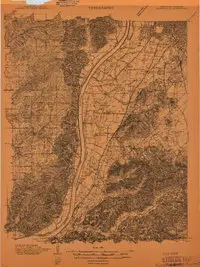
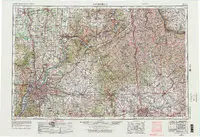
Investigated on TV
- Ghost Hunters · Season 2, episode 14 — “Waverly Hills”2006
- Ghost Hunters · Season 16 — “2007 Halloween Special – Ghost Hunters Live”2007
- Ghost Hunters · Season 3, episode 18 — “Sanatorium Live Results”2007
- Ghost Hunters · Season 7, episode 22 — “Voices of Pain”2011
- Kindred Spirits · Season 3, episode 5 — “The Shadow of Death”2019
- Ghost Hunters · Season 13, episode 9 — “Return to Waverly Hills”2020
Where it is
The circle shows the general area only. Open on the full map
Sources
- National Register nomination #83002746 (texte intégral) — U.S. National Park Service · Public record
- National Register of Historic Places file (NRHP #83002746) — U.S. National Park Service · Public domain (U.S. government)
- Wikimedia Commons category : Waverly Hills Sanatorium — Wikimedia Commons
- USGS 1:250000-scale Quadrangle for Louisville, KY 1956 — U.S. Geological Survey, 1956 · Public domain (USGS)
- USGS 1:48000-scale Quadrangle for Kosmosdale, KY 1909 — U.S. Geological Survey, 1909 · Public domain (USGS)
- "#015 – Historical Ghost Investigations Part 1" — MonsterTalk / Skeptics Society podcast (7 Apr 2010) — MonsterTalk / Skeptics Society podcast (7 Apr 2010
- "Former TB hospital now attracts ghost hunters" — Associated Press via KSL (Dylan Lovan, 29 Oct 2013) — Associated Press via KSL (Dylan Lovan, 29 Oct 2013
- "List of Ghost Adventures episodes" — Wikipedia — Wikipedia
- "List of Ghost Hunters episodes" — Wikipedia — Wikipedia
- official tour site — Waverly Hills Historical Society — Waverly Hills Historical Society
- "Waverly Hills Sanatorium still source of local curiosity" — The Louisville Cardinal (21 Oct 2003) — The Louisville Cardinal (21 Oct 2003
- Wikipedia article — Wikipedia · CC BY-SA 4.0
Text written by AI from the sources above and checked by a separate AI fact-check (how we work). Images: credits and licenses under each picture.
Spotted a mistake? Report an error