
Haunted place · Ohio, United States
Chateau Laroche
Updated November 202611 sourcesHow to visit
- 2 archive documents
Hand-built medieval castle near Loveland, Ohio, raised over 50 years by Harry Andrews, whose spirit his scout knights say still hides their things.
The story
Château Laroche, better known as Loveland Castle, is a one-man medieval fantasy built in stone on the bank of the Little Miami River just north of Loveland, in southwest Ohio. Its creator, Harry D. Andrews (1890-1981), was a World War I veteran, a Boy Scout leader and a lifelong admirer of the Middle Ages.
Andrews' own life reads like a tall tale. While in training at Camp Dix during the war he fell ill with cerebrospinal meningitis, was pronounced dead and taken to the morgue, then brought back with a shot of adrenaline. By the time word of his survival caught up, his fiancée, who believed him dead, had married another man. Later in the war he was stationed in southwest France and lodged in a military hospital set up in the Château de la Roche, a 19th-century castle built for the Russian count Grigory Kushelev-Bezborodko. He borrowed its name for his own project.
Back in Ohio, Andrews acquired his land in an unusual way: the lots were giveaways offered with one-year subscriptions to *The Cincinnati Enquirer*. He started building in 1927 according to Wikipedia, or in 1929 according to Colgate's alumni magazine (June 5) and Mental Floss, and kept at it for more than half a century, largely by hand. At first he hauled rocks up from the river; when those ran short, he made his own bricks by pouring cement into empty quart milk cartons. The result is a castle with towers, battlements and a chapel.
Andrews died in April 1981 after being badly burned by a trash fire on the property. Accounts disagree on the details: Colgate University's alumni magazine says he died two days later, while other versions place the fire on the roof or say he lingered for more than two weeks. He left the castle to the Knights of the Golden Trail, the Boy Scout troop he had led, and, according to Mental Floss, his remains were scattered on the property.
The legend
The ghost stories at Loveland Castle are homegrown and, by most accounts, good-humored. They begin with Andrews himself, who liked to tell visitors that a spirit he called the "Casper Poltergeist" lived in the castle. Mental Floss, in a 2015 profile, describes that resident spook as his own invention.
After his death the main character changed. The Knights of the Golden Trail, the volunteers who maintain the place, say that Andrews never really left, and the scattering of his remains on site is usually offered as the reason. In their telling his presence is playful rather than threatening: tools and personal items vanish or turn up somewhere else, and the knights blame their founder for hiding them. Some volunteers say they have occasionally heard voices or glimpsed a figure. American Hauntings, Troy Taylor's ghost-hunt company in Alton, Illinois, which has sold evening ghost hunts here (8 p.m. to 2 a.m., last date on its page June 2022), adds visitor reports of footsteps, voices and a man seen walking around or looking down from the battlements. That is a single commercial source, so treat it accordingly.
Other stories circulate online with even less support: chess pieces that move by themselves, belongings placed on Andrews' bed discovered on the floor the next morning, messages tapped out on an old typewriter, a Norman knight said to have appeared at the builder's door after dark, and a woman supposedly killed when a moonshine still blew up in a cave nearby. None of these could be traced to a reliable or dated source, and they should be read as folklore in progress.
The only printed reference that Wikipedia cites for the haunting is Jeff Morris' *Haunted Cincinnati and Southwest Ohio* (Arcadia, 2009). No paranormal television episode about the castle was found, and there is no dated first report. The castle's own website keeps things light, saying simply, "If you believe in ghosts...the Castle has them!" and inviting visitors to look at ghost photographs and read the knights' stories on site. Its FAQ even brings up the Loveland Frogman, a creature of local cryptid lore rather than a ghost story.
What remains today
Since 1981 the knights have renovated and largely finished what Andrews left incomplete. The east tower shows a short video about his decades of work. The upstairs chapel is lined with stones that Andrews collected on his travels or received from friends and admirers abroad. More recent additions include enlarged gardens and a greenhouse. The building operates as a museum, and its handmade milk-carton bricks and river stones are a large part of the appeal.
Visiting
Loveland Castle is open to the public as a museum run by the Knights of the Golden Trail; check the official website for current hours and admission before going. A 2015 article described an annual Halloween "Scary Knight Tour"; check whether it still runs.
For a paranormal visit, there are two legal options. Groups can book a private investigation by appointment under a signed contract; the castle's FAQ lists $300 for up to 15 people, from 7 p.m. to 10 a.m., and stresses that it is "not a sleepover." American Hauntings has also sold ticketed evening events; the last date on its page is June 2022. Do not attempt to enter the grounds after hours. The castle sits beside the Little Miami River, so if you combine your visit with time on the river or nearby trails, dress for the weather and watch your footing on the riverbank.
The ghosts
Spirit
Harry Andrews
Said to be Harry D. Andrews (1890-1981), builder of the castle
The volunteer knights who run the castle say its builder still lingers, usually linking this to the scattering of his ashes on the grounds. He is described as a playful presence who hides or moves their belongings; volunteers and ghost-hunt guests also report voices, footsteps and a male figure on the battlements.
- Moving objects
- Voices
- Apparitions
- Footsteps
First reported: after 1981. Reported by: Knights of the Golden Trail; American Hauntings; Jeff Morris, Haunted Cincinnati and Southwest Ohio (2009)
The Casper Poltergeist
Andrews used to tell visitors that a poltergeist he nicknamed Casper lived in the castle. Mental Floss describes it as his own invention.
First reported: during Andrews' lifetime. Reported by: Harry Andrews; Mental Floss (2015)
Photographs


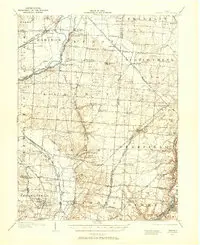
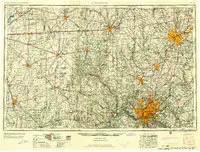
Old maps
Where it is
The circle shows the general area only. Open on the full map
Sources
- Wikimedia Commons category : Chateau Laroche — Wikimedia Commons
- USGS 1:250000-scale Quadrangle for Cincinnati, OH 1957 — U.S. Geological Survey, 1957 · Public domain (USGS)
- USGS 1:62500-scale Quadrangle for Mason, OH 1904 — U.S. Geological Survey, 1904 · Public domain (USGS)
- Ghost Hunt / FAQ — Loveland Castle (official) — Loveland Castle (official
- Harry Andrews memorial — Find a Grave (user-contributed) — contributed; weak
- Historic Loveland Castle & Museum (home page) — Knights of the Golden Trail (official) — Knights of the Golden Trail (official
- "Night at Loveland Castle" event page — American Hauntings (commercial ghost-hunt operator) — hunt operator
- Official website
- "Ohio's Loveland Castle Was Hand-Built By a Midwestern Medievalist" — Mental Floss (Maggie Malach, 8 Oct 2015) — Mental Floss (Maggie Malach, 8 Oct 2015
- "The Man in the High Castle" (Harry Andrews '16) — Colgate Magazine (Phoebe Sklansky, Aug 2020) — Colgate Magazine (Phoebe Sklansky, Aug 2020
- Wikipedia article — Wikipedia · CC BY-SA 4.0
Text written by AI from the sources above and checked by a separate AI fact-check (how we work). Images: credits and licenses under each picture.
Spotted a mistake? Report an error