
Haunted place · Virginia, United States
Ferry Plantation House
Updated November 202611 sourcesHow to visit
- Protected heritage
- 3 archive documents
A c. 1830 brick house on a 1642 ferry site in Virginia Beach, now a volunteer museum that counts 11 spirits, from a kneeling old man to ghostly children.
The story
Ferry Plantation House stands in the Old Donation Farm neighborhood of Virginia Beach, Virginia, near the Lynnhaven River. It goes by several names, including Old Donation Farm, Ferry Farm and Walke Manor House, and the site's history runs much deeper than the present brick building.
In 1642 Savill Gaskin began a ferry on the Lynnhaven, only the second in the Hampton Roads area after one started nearby by Adam Thoroughgood. It carried people to the county courthouse and to plantations along the river, making eleven stops in all, and a cannon was fired to call it. From 1735 the site held the third courthouse of Princess Anne County, the first one built of brick. The courthouse era left a darker mark on local memory: Grace Sherwood, remembered as the "Witch of Pungo," faced trial by ducking on July 10, 1706, at Witchduck Point, and part of her ordeal is associated with a courthouse on the plantation. The ducking itself took place out in the river, some 200 yards from shore beyond today's Witchduck Road.
The Walke family built a manor here in 1751. It burned on September 12, 1828. George and Elizabeth (Walke) McIntosh then reused its bricks to put up the present Federal-style house around 1830, for their son Charles Fleming McIntosh, who would later captain the Confederate ironclad CSS Louisiana. A west wing was added in 1850. Over its long history the property has served as a plantation, a courthouse, a school and a post office.
By 1986 the house stood abandoned. Investors bought it in 1994; after their resale plan fell through, the deed passed to the city in June 1996, and volunteers from the Friends of the Ferry Plantation House restored it as a museum and educational center. It was added to the Virginia Landmarks Register in 2004 and the National Register of Historic Places in 2005. Its founder, Belinda Nash, also campaigned on behalf of Grace Sherwood, and on July 10, 2006, exactly three centuries after the ducking, Governor Tim Kaine restored Sherwood's good name.
The legend
The museum does not shy away from ghosts. Wikipedia reports eleven spirits, and most of the identities below come from the museum's own paranormal page, based on docents' sightings and EVP (voice recording) sessions. That makes them part of the site's living folklore rather than established facts, and no skeptical study of the house has been published.
The earliest dated accounts go back to caretakers in the 1980s, before the house was left empty in 1986. They described an elderly African American man on his knees beside the west wall of a room; a concealed fireplace was afterward discovered behind it. Investigators call him Henry, a name drawn from EVP sessions, and say he spent his whole life on the plantation, staying on after emancipation and living above the Old Kitchen.
A docent's toddler granddaughter is said to have mentioned a bearded man painting on the second-floor stair landing. The museum proposes General Thomas H. Williamson, who lived from 1813 to 1888 and was the son of Thomas and Anne Walke Williamson; Wikipedia's older version calls him "the artist Thomas Williamson," a Walke in-law who owned the manor. The museum's identification is the more specific one.
Children feature heavily. A boy called Eric supposedly fell to his death through a low-set window of the room now used for conferences, which would place him after the 1850 addition; children's voices and moving toys are reported in that room. A small girl wearing ringlets and Mary Janes has been suggested to be Bessie McIntosh, daughter of Charles and Isabella McIntosh, who died in 1860 at age five. A boy and a girl have also been glimpsed side by side by the upstairs wall, at the head of the staircase, before fading away. In the Best Parlor, the reflection of an expectant woman dressed in blue has shown up in a window pane. The museum observes that Isabella McIntosh was in her eighth month when her husband died of wounds in 1862, but stops short of naming her as the ghost.
An older list, used by Wikipedia and Alpheus Chewning's book Haunted Virginia Beach (2006), adds people drowned when a ship was wrecked at the ferry landing in 1810, a formerly enslaved person, a soldier killed in battle, Sally Rebecca Walke still grieving for her fiancé, in whose memory she set out a magnolia in 1863, and a Lady in White said to have broken her neck in a fall down the stairs. Visitors also report the sound of dragging chains, which some link to the courthouse's stocks and pillory, lights already on in the empty house, including the third floor, when volunteers arrive to open up, a figure photographed in a window of the Green Room, and, before the surrounding subdivision was built, balls of light dancing around the roof.
Paranormal teams visit often. Port City Paranormal of Wilmington, North Carolina, has investigated many times, and numerous groups and YouTubers, OmarGoshTV among them, have posted their results online. Our sources mention no television ghost-hunting episode here.
What remains today
The restored c. 1830 brick house, with its 1850 west addition, operates as a volunteer-run museum. Rooms named in the ghost stories include the Best Parlor, the Conference Room and the Green Room, and the Old Kitchen also survives in the stories as Henry's quarters. In the side yard, a red maple and a marker honor Grace Sherwood. The museum also hosts a Summer History Camp teaching children about life in the eighteenth and nineteenth centuries.
Visiting
Ferry Plantation House is open to visitors, with regular tours by advance booking; see ferryplantation.org for details. The volunteer museum runs paranormal programs itself, including "Friday Night Frights" night tours and, according to Wikipedia, a Halloween "Stroll of Lost Souls." Groups of up to twelve investigators can book an overnight stay for a $300 donation, though the museum says its paranormal nights are fully booked through 2026. Annual Grace Sherwood events include a re-enactment of the ducking. The actual ducking spot at Witchduck Point lies off a private home, so view it only from public places.
The ghosts
Boy and girl at the top of the stairs
Two children are glimpsed by the wall at the head of the staircase, then fade away.
- Apparitions
Reported by: Ferry Plantation House museum
Eric
Said to be Boy said to have died falling from a Conference Room window
A young boy supposedly fell through a low-set window of the Conference Room and died. Children's voices and moving toys are reported there.
- Voices
- Moving objects
- EVP recordings
Reported by: Ferry Plantation House museum
Fallen soldier
An unnamed soldier is listed among the spirits.
Reported by: Wikipedia (older museum list)
Servant or worker
Former enslaved person
A formerly enslaved person appears in the older list of spirits.
Reported by: Wikipedia (older museum list)
Girl with ringlets
Said to be Suggested to be Bessie McIntosh, who died in 1860 aged five
A small girl in ringlets and Mary Janes is reported; the museum suggests Bessie, daughter of Charles and Isabella McIntosh.
- Apparitions
Reported by: Ferry Plantation House museum
Servant or worker
Henry
Said to be Elderly African American man who lived his whole life on the plantation, staying after emancipation (name from EVP)
In the 1980s caretakers saw an old man on his knees by the west wall of a room that turned out to conceal a fireplace. EVP sessions supplied the name Henry, and he is said to have lived above the Old Kitchen.
- Apparitions
- EVP recordings
First reported: 1980s. Reported by: Ferry Plantation House museum; 1980s caretakers
Lady in White
A woman in white is said to have died of a broken neck after falling down the stairs.
- Apparitions
Reported by: Wikipedia (older museum list); Chewning, Haunted Virginia Beach (2006)
Pregnant woman in blue
The reflection of an expectant woman in blue appears in a Best Parlor window. Isabella McIntosh was in her eighth month of pregnancy when her husband died in 1862, though the museum does not formally link the two.
- Apparitions
Reported by: Ferry Plantation House museum
Sally Rebecca Walke
Said to be Sally Rebecca Walke, who planted a magnolia for her fiancé in 1863
Her spirit is said to mourn her fiancé.
- Apparitions
Reported by: Wikipedia (older museum list)
Phantom ship
Shipwreck victims of 1810
Said to be People who died in an 1810 shipwreck at the ferry landing
Victims of a shipwreck at the ferry landing are counted among the house's spirits.
Reported by: Wikipedia (older museum list)
Spirit
The painter on the landing
Said to be Proposed by the museum as General Thomas H. Williamson (1813-1888); Wikipedia says artist Thomas Williamson
A docent's toddler granddaughter is said to have mentioned a bearded man painting on the second-floor stair landing.
- Apparitions
Reported by: A docent's granddaughter, as a toddler; Ferry Plantation House museum; Chewning (2006)
Photographs


Old maps
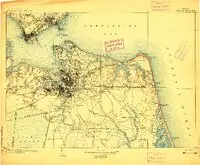
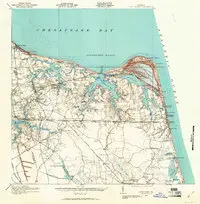
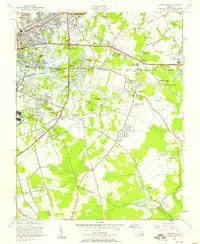
Where it is
The circle shows the general area only. Open on the full map
Sources
- National Register nomination #04001545 (texte intégral) — U.S. National Park Service · Public record
- National Register of Historic Places file (NRHP #04001545) — U.S. National Park Service · Public domain (U.S. government)
- Wikimedia Commons category : Ferry Plantation House — Wikimedia Commons
- USGS 1:125000-scale Quadrangle for Norfolk, VA 1907 — U.S. Geological Survey, 1907 · Public domain (USGS)
- USGS 1:24000-scale Quadrangle for Kempsville, VA 1955 — U.S. Geological Survey, 1955 · Public domain (USGS)
- USGS 1:62500-scale Quadrangle for Cape Henry, VA 1918 — U.S. Geological Survey, 1918 · Public domain (USGS)
- "Grace Sherwood, Witch of Pungo" — Ferry Plantation House (official) — Ferry Plantation House (official
- "History" — Ferry Plantation House (official) — Ferry Plantation House (official
- Home page — Ferry Plantation House (official) — Ferry Plantation House (official
- "Paranormal" — Ferry Plantation House (official museum site) — Ferry Plantation House (official museum site
- Wikipedia article — Wikipedia · CC BY-SA 4.0
Text written by AI from the sources above and checked by a separate AI fact-check (how we work). Images: credits and licenses under each picture.
Spotted a mistake? Report an error