
Haunted place · District Of Columbia, United States
The Octagon House
Updated November 202613 sourcesHow to visit
- Protected heritage
- 16 archive documents
The Octagon, Washington, D.C.: the 1800 Tayloe house where Madison signed the Treaty of Ghent, linked to ghostly bells, Dolley Madison and a debunked legend.
The story
The Octagon stands in the Foggy Bottom area of Washington, D.C., not far from the White House. It was commissioned by Colonel John Tayloe III of Mount Airy, in Richmond County, Virginia, a planter then reputed to be the wealthiest in the country. Eton- and Cambridge-educated, a Federalist and an admirer of George Washington, Tayloe served in the Virginia legislature. According to the National Register nomination, Washington himself persuaded him in 1797 to build in the new Federal City rather than in Philadelphia. That April, Tayloe paid Gustavus W. Scott one thousand dollars for a corner lot where two streets meet at a sharp angle (some accounts cited by Wikipedia name Benjamin Stoddert as the seller).
The architect was Dr. William Thornton, designer of the U.S. Capitol, who had to fit a mansion onto that awkward wedge. Built in 1799-1800, the house is not an octagon at all: it has six outer sides, with a rounded bay at the entrance, and its plan is built from a circle, a triangle and two rectangles. The nomination counts it among the finest achievements of Federal architecture. Tayloe and his wife Ann Ogle, daughter of Maryland governor Benjamin Ogle, raised a large family here, first as a winter home and, from 1818, year-round. The Tayloes held hundreds of people in slavery across their estates, and between 12 and 18 enslaved people worked at the Octagon, which had quarters, stables, a smokehouse, a laundry and an ice house.
Its great moment came after British troops burned the White House and the Capitol in August 1814. The Tayloes offered the house to President James Madison and Dolley Madison, who moved in on September 8, 1814. On February 17, 1815, Madison signed the Treaty of Ghent, ending the War of 1812, in the round upstairs study now known as the Treaty Room. Wikipedia dates the stay from September 1814 to March 1815; other sources speak of six months or most of a year. With the White House and Blair House, it is one of only three surviving buildings that served as a presidential residence.
John Tayloe died in 1828 and Ann in 1855, both in the house, according to Wikipedia. Afterward it was rented out as a girls' school and government offices, and around the 1880s it was divided into apartments and eventually became a tenement. The American Institute of Architects rented it from January 1, 1899, bought it in 1902, and saw it designated a National Historic Landmark in 1960.
The legend
The Octagon is often called one of the most haunted houses in Washington, and a CBS News report in October 2025 called it one of D.C.'s most haunted homes, with its house manager saying alarms on the upper floors are "just our friends playing." Wikipedia's own article warns that the tales are legends that grew over two centuries, not history. Reported sightings and presences cluster on the spiral staircase, the second- and third-floor landings, a third-floor bedroom and the rear garden, and witnesses have included visitors, curators and museum staff.
The oldest dated story concerns the call bells once used to summon the enslaved household staff. After Tayloe's death in 1828, they reportedly rang on their own, and the legend ties them to the people who had been enslaved in the house. His granddaughter Virginia Tayloe Lewis, who grew up there, wrote in an unpublished memoir that the bells kept ringing even after the wires were cut. In 1874, Mary Clemmer Ames retold the story in Ten Years in Washington, describing a strong dinner guest who seized the wires and was "lifted bodily from the floor". She offered two explanations, rats or no explanation at all, and added that an exorcism had failed and the family finally rehung the bells differently.
By 1888 the reputation was strong enough that a dozen men reportedly stayed overnight to put it to the test. One of them described, in a local paper, three female shrieks at midnight in a second-floor room, then the clank of sabers and the tramp of feet until dawn. Newspapers reprinted or paraphrased it at least five times up to 1969, though the researcher behind the Ghosts of DC website points out that it reads like a humorous sketch.
Three years later the Evening Star of Washington, on June 20, 1891, quoted "an expert in psychic science" on the house "long reputed haunted." People passing at night, he said, reported "strange and ghostly faces at the windows and lights moving" from room to room, and visitors stumbled over a cat on the stairs. He tied it to a cat painted on a stable window pane that schoolboys could never break with stones.
Other figures appeared later. Dolley Madison, a favorite Washington ghost, is said to hold phantom receptions in the entrance hall and the drawing room, heralded by the scent of lilac (WETA's Boundary Stones blog says lavender); Ghosts of DC traces these stories to the 1880s, when the house was split into apartments. A gambler said to have been shot on the third floor in the late 1800s, grabbing a bell rope as he fell, first appeared in the Philadelphia Evening Telegram on October 5, 1912, based on a single interview with a lodger who claimed the dead man visited his room nightly. In the late 1940s, a physician summoned for the caretaker's ailing wife asked whether a costume party was under way, having just passed a man in an early-1800s military uniform on the stairs.
Staff stories continue: Alric H. Clay, the AIA's superintendent in the 1960s, claimed that lights switched on and doors swung open late at night. People speak of rustling silk on the stairs, a hall lamp that swings by itself, a stair-foot rug corner that flips up again and again, a spot nearby that some feel compelled to avoid, and tiptoe footprints a curator found in undisturbed dust on the top landing. Today's staff mention flickering lights, opening doors and alarms on the upper floors, which they call "just our friends playing", and repeat an anecdote that a young Jacqueline Bouvier, later Jacqueline Kennedy, smelled lilac and sensed a presence while working for a local newspaper.
The most famous tale is also the most clearly false. Two Tayloe daughters supposedly died in falls on the staircase: one before the War of 1812, after a row with her father about her British suitor, her body said to appear at the foot of the stairs or as a candle flame climbing them; the other around 1817, after eloping. The story first surfaced in the Minneapolis Tribune in 1908 and was featured in the History Channel's Haunted History episode on Washington, aired October 29, 1999. Records disprove it. Of the seven Tayloe daughters, none died in the Octagon. Ann died at one month old in 1800 and never lived there; Rebecca died of illness at 18 in 1815, at Mount Airy, while the Madisons were renting the house; Elizabeth Mary died at 26 in 1832, married and living elsewhere in Washington. The other four lived past 38. A rival version ran the same year without the Tayloes: the St. Tammany Farmer of Louisiana, on December 12, 1908, credited The Illustrated Sunday Magazine with an unnamed "cruel slave-owner" who whipped an enslaved man to death in the garret, and with a daughter who, after a quarrel on the stairs over a marriage, "either fell or was thrown down the steps and killed." It has no bells, and the Gilpin Observer of Colorado repeated it on January 7, 1909. No formal paranormal investigation has been documented.
What remains today
The house survives largely intact: red brick over a stone basement with Aquia Creek sandstone trim, a circular entrance hall with stoves shaped like classical urns, an oval stair hall with its stair rising to the third floor, and reception rooms with Coade stone mantels, one signed and dated 1799. A hipped roof replaced the original flat one around 1840, and the ice house is the only outbuilding left. The Octagon is a museum and event space run by the Architects Foundation, the AIA's charitable arm, next to the institute's modern headquarters.
Visiting
The Octagon is open as a museum, so the staircase and landings at the heart of the legends can be seen legally. Opening days and booking rules change, so check with the Architects Foundation before you go. In October the Foundation has run its own ghost events, such as a candlelit, adults-only "Poltergeists and Pints" tour in 2022 that promised to separate fact from fiction; check whether a similar program is scheduled. Respect museum rules and never try to enter outside visiting hours.
The ghosts
Dolley Madison
Said to be Dolley Madison, first lady, who lived here 1814-1815
She is said to hold phantom receptions in the entrance hall and drawing room, heralded by a scent of lilac (or lavender, per WETA). Staff repeat an anecdote that Jacqueline Bouvier once smelled lilac and felt a presence.
- Apparitions
- Smells
First reported: 1880s. Reported by: Washington ghost lore; Ghosts of DC; WETA Boundary Stones (2014); CBS News (2025)
The eloped Tayloe daughter
Said to be A second Tayloe daughter, according to the legend (debunked)
Legend says she came back after eloping and fell to her death from the third-floor landing during a quarrel with her father, and that she still haunts the upper stairs. No historical basis.
- Apparitions
First reported: 1908. Reported by: Minneapolis Tribune (1908); ghost books
Spirit
The household presences
Alric H. Clay, the AIA superintendent, claimed lights switched on and doors swung open late at night. Others speak of rustling silk on the stairs, a swinging hall lamp, a carpet edge that turns over, tiptoe footprints in dust, and upper-floor alarms going off.
- Strange lights
- Doors opening
- Moving objects
First reported: 1960s. Reported by: Alric H. Clay; curators and museum staff; CBS News (2025)
Spirit
The murdered gambler
Said to be A gambler shot in the third-floor bedroom in the late 19th century, per legend
A gambler killed over a card game is reportedly seen in the third-floor room where he died. A 1912 newspaper quoted a man who stayed a month and said the spirit visited every night.
- Apparitions
First reported: 1912. Reported by: 1912 newspaper article
Spirit
The night shrieks of 1888
A dozen men who stayed overnight to test the house's reputation described three women's shrieks at midnight in a second-floor room, then clanking sabers and footsteps until morning. Often reprinted; Ghosts of DC suggests it reads as a humorous piece.
- Screams
- Footsteps
First reported: 1888. Reported by: First-hand newspaper account (1888)
Spirit
The night voices of 1888
Twelve men who spent a night in the house to debunk its reputation reported three women's shrieks from a second-floor room at midnight, then the clank of sabers and footsteps until morning. The account was reprinted from 1892 to 1969.
- Screams
- Footsteps
- Voices
First reported: 1888. Reported by: First-hand newspaper account (1888)
Spirit
The phantom servants' bells
Said to be Linked by legend to the people enslaved in the Tayloe household
After John Tayloe III's death, the bells that once called enslaved servants are said to have rung by themselves, even once their wires were cut. In 1874 Mary Clemmer Ames described a strong guest hoisted into the air as he held the wires, an exorcism that failed, and rats as one possible cause.
- Bells
First reported: After 1828 (Tayloe family memoir); in print 1874. Reported by: Virginia Tayloe Lewis (unpublished manuscript); Mary Clemmer Ames, Ten Years in Washington (1874)
The soldier on the stairs
A physician called to treat the caretaker's ailing wife met a man dressed in an early-1800s uniform on the stairs and asked whether a costume party was under way. No party was taking place.
- Apparitions
First reported: Late 1940s. Reported by: A visiting doctor, via caretaker James Cyprus
The Tayloe daughter of the second-floor landing
Said to be A daughter of John Tayloe III, according to the legend (no historical basis)
She supposedly fell to her death after quarreling with her father over a British officer. Her form is said to lie at the bottom of the stairs or to appear as a candle moving up the staircase. Records show no Tayloe daughter died in the house.
- Apparitions
- Strange lights
First reported: 1908. Reported by: Minneapolis Tribune (1908); ghost books and TV
Photographs


From the archives


Old maps
Where it is
The circle shows the general area only. Open on the full map
Sources
- National Register nomination #66000863 (texte intégral) — U.S. National Park Service · Public record
- National Register of Historic Places file (NRHP #66000863) — U.S. National Park Service · Public domain (U.S. government)
- Wikimedia Commons category : Octagon House (Washington, D.C.) — Wikimedia Commons
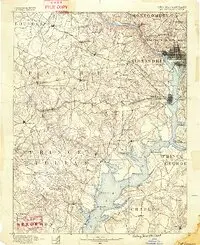
- USGS 1:125000-scale Quadrangle for Mt. Vernon, VA 1890 — U.S. Geological Survey, 1890 · Public domain (USGS)
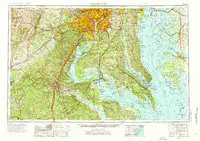
- USGS 1:250000-scale Quadrangle for Washington, DC 1957 — U.S. Geological Survey, 1957 · Public domain (USGS)
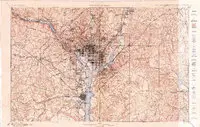
- USGS 1:62500-scale Quadrangle for Washington, MD 1900 — U.S. Geological Survey, 1900 · Public domain (USGS)
- Octagon House ghost story, Gilpin Observer, January 7, 1909 — Gilpin Observer
- "Ghost stories from the Octagon" — Architects Foundation (Olivia Hutto, 27 Oct 2020). — Architects Foundation (Olivia Hutto, 27 Oct 2020).
- "Inside Octagon House, one of D.C.'s oldest – and most haunted – homes" — CBS News via Yahoo (Willie James Inman, Oct 2025). — CBS News via Yahoo (Willie James Inman, Oct 2025).
- "Is the Octagon House Haunted? DC's Most Famous Ghost Story" — Ghosts of DC (2012, updated 2026)
- "Poltergeists and Pints" (event page, 22 Oct 2022) — Architects Foundation. — Architects Foundation.
- "The Octagon House's Tales from the Grave" — Boundary Stones, WETA (Claudia Swain, 16 Jul 2014). — Boundary Stones, WETA (Claudia Swain, 16 Jul 2014).
- Wikipedia article — Wikipedia · CC BY-SA 4.0
Text written by AI from the sources above and checked by a separate AI fact-check (how we work). Images: credits and licenses under each picture.
Spotted a mistake? Report an error