
Haunted place · Virginia, United States
Bremo Historic District
Updated November 20269 sourcesHow to visit
- Protected heritage
- 21 archive documents
A Jeffersonian plantation of three houses on the James River in Fluvanna County, Virginia, where Anne Cocke, who died in 1816, is said to walk Bremo Recess.
The story
Bremo is a plantation of more than 1,500 acres on the James River in Fluvanna County, Virginia, just west of the village of Bremo Bluff. It grew on a land grant the Cocke family had held since 1725, but its buildings are the work of one man: John Hartwell Cocke (1780-1866), a planter, War of 1812 brigadier general and tireless reformer who moved here from Surry County between about 1803 and 1809. He borrowed the name from the old family seat of Bremo in Henrico County; where that name came from is unclear, and one suggestion links it to Braemore in Scotland.
Cocke built three separate house groups between roughly 1803 and 1845. The first was Bremo Recess, a modest frame house where the family lived while the main residence went up. The National Register nomination dates it to about 1803-1809, while Wikipedia describes a larger home there completed around 1812 on higher ground set back from the river. Cocke married Anne Blaws Barraud, daughter of the Williamsburg physician Philip Barraud, in Norfolk on Christmas Day 1802. The couple had six children. Anne died in December 1816, a few months after her daughter Sally was born, and was buried at Bremo Recess.
The centerpiece, Upper Bremo, was finished in 1819 or 1820 (sources differ). Cocke consulted Thomas Jefferson as well as Conneley, an architect from Richmond, but the man who turned the ideas into a building was John Neilson, a master builder from the Monticello workshop. The result is a five-part brick house in the Palladian manner Jefferson made fashionable in Virginia: Tuscan portico and loggia, Chinese lattice railings, very tall principal rooms, bed alcoves and narrow stairs. Jefferson's favored flat ridge-and-valley roof leaked so badly that Cocke soon replaced it with a hipped one. The architectural historian Fiske Kimball later called Upper Bremo the most nearly perfect house in the Jeffersonian tradition. The nomination calls its stone barn, with a Tuscan portico and cupola, the finest Neoclassical barn in the United States.
Around 1844 Cocke remodeled Bremo Recess and rebuilt a small older house, Lower Bremo (possibly an enlarged 18th-century hunting lodge), both in a Jacobean Revival style. He said he had copied the old six-chimney Custis house in Williamsburg and Bacon's Castle in Surry. Lower Bremo was meant for his son Cary, but Cocke lived there himself for the last twelve years of his life.
Cocke's record on slavery is full of contradictions. He held enslaved people while publicly opposing slavery, was a senior officer of the American Colonization Society from its founding in 1819 until he died and later backed resettlement in Liberia, running an Alabama plantation from 1848. He operated a school for enslaved people (its schoolroom benches still survive in a wing of Upper Bremo), built rare rammed-earth (pise) quarters and, in 1835, a board-and-batten chapel for the enslaved community. A leading temperance campaigner, he led the American Temperance Union as its president in 1836 and erected a Doric Temperance Temple in 1849. He also sat on the University of Virginia's Board of Visitors from 1819 to 1852. Bremo was entered on the Virginia Landmarks Register and the National Register in 1969, and National Historic Landmark status followed in 1971.
The legend
Bremo's ghost story is a quiet one, and it rests on a single source. Anne Cocke, the general's first wife, who died in 1816 and lies buried at Bremo Recess, is said to have been seen wandering inside that house. Wikipedia repeats the report, citing a 2010 article by Sancken titled "Ghostly legends of Fluvanna County" in the local weekly Fluvanna Review. That page is no longer online and its contents could not be checked.
Beyond the bare statement that a woman's figure has been seen in the house, nothing is documented in our sources: no named witnesses, no dates of sightings, no sounds or other effects. No paranormal investigation or television episode is known, and there is no ghost tour. The story clearly attaches itself to a real, well-recorded death, that of a young mother who died months after childbirth. Readers should treat it as a piece of county folklore recorded in 2010 rather than a long-attested tradition.
What remains today
The district is unusually intact. The 1969-71 nomination counted nearly a dozen significant structures and rated their condition good and largely unaltered. At Upper Bremo stand the mansion, its outbuildings, the porticoed stone barn, a stone-and-brick milk house and stable, and two pise quarters for enslaved workers. The Temperance monument, a small Greek Doric pavilion first placed beside the James River and Kanawha Canal, was moved below the bluff, where it overlooks a long basin fed through an iron urn shaped like a pitcher. Bremo Recess keeps its curving gables, diagonal chimney stacks, triple-arched hall screen, a guest house and stone farm buildings. Lower Bremo, with its H-shaped plan, had its interior entirely redone in 1918-1919 and keeps a big stone-and-timber barn from about 1840. The slave chapel was moved around 1884 to the village of Bremo Bluff, where it still stands. The houses are privately owned, and the estate is a National Historic Landmark.
Visiting
Bremo is a private, lived-in estate and is not open to the public. The houses are not known to be open to the public, we found no ghost tours, and the Virginia Department of Historic Resources asks visitors to respect the owners' privacy. Do not enter the grounds. The legal ways to get to know the place are the Historic American Buildings Survey photographs and drawings (survey of 1940, at the Library of Congress), the Virginia DHR register file, and the relocated Bremo Slave Chapel, which stands in the village of Bremo Bluff. Those drawn by Upper Bremo's Jeffersonian design can visit Monticello itself.
The ghosts
Anne Cocke of Bremo Recess
Said to be Anne Blaws Barraud Cocke, first wife of John Hartwell Cocke, died December 1816 and buried at Bremo Recess
Anne Cocke died in 1816, a few months after her daughter Sally was born, and was buried at Bremo Recess. Her figure is said to have been seen wandering inside the house. The only known source is a 2010 local newspaper piece on Fluvanna County legends.
- Apparitions
First reported: 2010 (earliest dated mention found). Reported by: Sancken, Fluvanna Review (2010), cited by Wikipedia
Photographs


From the archives


Old maps
Where it is
The circle shows the general area only. Open on the full map
Sources
- National Register nomination #69000241 (texte intégral) — U.S. National Park Service · Public record
- National Register of Historic Places file (NRHP #69000241) — U.S. National Park Service · Public domain (U.S. government)
- Wikimedia Commons category : Bremo Plantation — Wikimedia Commons
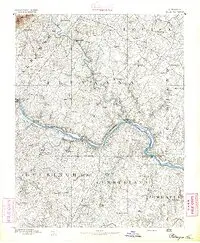
- USGS 1:125000-scale Quadrangle for Palmyra, VA 1891 — U.S. Geological Survey, 1891 · Public domain (USGS)
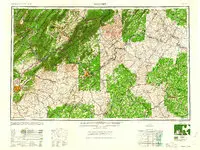
- USGS 1:250000-scale Quadrangle for Roanoke, VA 1959 — U.S. Geological Survey, 1959 · Public domain (USGS)
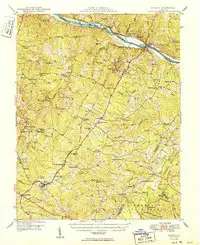
- USGS 1:62500-scale Quadrangle for Dillwyn, VA 1950 — U.S. Geological Survey, 1950 · Public domain (USGS)
- Bremo — Virginia Department of Historic Resources — Virginia Department of Historic Resources
- John Hartwell Cocke — Wikipedia — Wikipedia
- Wikipedia article — Wikipedia · CC BY-SA 4.0
Text written by AI from the sources above and checked by a separate AI fact-check (how we work). Images: credits and licenses under each picture.
Spotted a mistake? Report an error