
Haunted place · West Virginia, United States
Trans-Allegheny Lunatic Asylum
Updated November 202616 sourcesHow to visit
- As seen on Ghost Hunters
- As seen on Portals to Hell
- Protected heritage
- 2 archive documents
Weston, West Virginia's vast sandstone Kirkbride asylum (1864-1994), now a museum whose ghost hunts center on a girl called Lily and the fourth floor.
The story
Before the Civil War, reformers such as Dorothea Dix and Dr. Thomas S. Kirkbride urged American states to house people with mental illness more humanely. Virginia responded by authorizing a third state asylum, after Williamsburg and Staunton, at Weston in the mountainous west of the state. Its National Historic Landmark nomination explains that the project was also meant to calm tensions between eastern and western Virginians, as the first large public institution beyond the mountains. Its first official name was "The Lunatic Asylum West of the Alleghany Mountains."
The Baltimore architect Richard Snowden Andrews (1830-1903), whose other works included a wing of the Treasury Building in Washington and the Governor's Mansion in Annapolis, drew the plans in 1858. Construction began that year but was not finished until 1880-81, slowed by the war, by the creation of West Virginia as a separate state and by the scale of the job. The builders worked from one end to the other instead of outward from the center, and kept to the 1858 design throughout. The first section, the one-story south wing, used blue sandstone from a quarry at Mount Clare in Harrison County; the nomination notes that the quality of materials declined as work went on.
The first patients arrived in 1864. Once West Virginia became a state, the institution was renamed the West Virginia Hospital for the Insane; in 1913 it became Weston State Hospital. Laid out on the Kirkbride plan, with patients sorted into wards along long, airy wings, it functioned as a largely self-sufficient community. It was designed for 250 patients but by the 1950s it was crowded with over 2,400. Husbands of that century could have their wives admitted on grounds as thin as "novel reading". The hospital closed in May 1994, and its patients were transferred to a newly built facility in Weston, the William R. Sharpe, Jr. Hospital.
On August 29, 2007, the state's Department of Health and Human Resources auctioned the empty 242,000-square-foot building; bidding opened at $500,000 and closed at $1.5 million (a 2011 Associated Press report says 2008, probably in error). The buyer restored the original name, Trans-Allegheny Lunatic Asylum, began maintenance work and opened the doors to visitors, with paranormal tours part of the plan from the start. One recent source says the site is now operated by a foundation.
The legend
Reliable sources contain no ghost reports from the hospital's 130 working years. Today's version of the legend grew alongside the tourist operation that began in 2007, when the first Fall Festival included paranormal tours, followed by regular ghost hunts from March 2008.
The most famous spirit is Lily (sometimes Lilly), a little girl often pictured in a white dress. The stories disagree: in one, she was born to a patient, raised inside the hospital and died at about nine, perhaps of pneumonia; in another, her mother died giving birth and the nurses brought her up. No historical record of her has been found, and her backstory comes from staff and writers. Visitors leave toys, candy and balloons in "Lily's room", and describe balls that roll on their own, giggling, the tinkle of a music box and a balloon drifting across the vacant room. Guides play an old recording said to capture a child calling for her mother.
On the fourth floor, two male spirits called Frank and Larry are said to enjoy card games and jokes, and guests bring them gifts of cards, poker chips and cigarettes. One room is linked to a "Big Jim". Staff lore adds a string of other names without documented identities: Jacob, said to respond to offers of whiskey; Ruth, described as an elderly woman confined to a feeding chair; Jesse; Elizabeth, said to have been a nurse; soldiers from the Civil War; and a killer known as "Slewfoot". A guide has also described a young man knifed during the 1970s, when part of the hospital served as a "drunk tank", who supposedly dragged himself toward the nurses' station; this is unverified.
Commonly reported phenomena include footsteps, doors opening and closing, voices and apparitions; the site's events manager says she has seen two full-bodied figures herself. Public ghost hunts often revolve around equipment "responses": REM-pods, EMF meters, flashlights that switch on and off, spirit boxes. One guide even speaks of visitors seeing doubles of themselves or of the guide.
Television has amplified all of this. Ghost Hunters investigated in season 4, episode 9, "Haunted Asylum", aired April 30, 2008, prompted by claims from volunteers restoring the building. The team described a woman's voice and footsteps on the fourth floor, a glowing orb, whispering and a dark shape in the kitchen, a child laughing and someone in a white smock, but only audio recordings were captured, with nothing on thermal or video cameras; they nonetheless concluded the building had an "intelligent haunting". TAPS returned for its 200th episode (season 9, episode 25, October 2014) to try to reach former patients. Paranormal Lockdown hosts Nick and Katrina spent 72 hours inside, among them Ward F, the morgue and the Women's Auxiliary Building; Portals to Hell featured it in season 1, episode 6 (2019); and Ghost Adventures, Ghost Stories, Sam and Colby, Destination Fear and Conjuring Kesha have all filmed there. In 2011 the owners turned down a Paranormal State producer who offered to "get rid of" the ghosts.
There is a serious counterpoint. In 2011 the Statewide Independent Living Council argued that reviving the "Lunatic Asylum" name and marketing ghosts sensationalizes mental illness. Writing for CrimeReads in 2023 after an overnight hunt, Nora Fussner cited the historian Colin Dickey on how confirmation bias shapes such experiences. The people behind these stories were real patients who endured severe overcrowding, and the museum's exhibits on restraints and treatments are a better guide to their lives than any ghost tale. Jayne Anne Phillips's Pulitzer Prize-winning novel Night Watch (2023) is set partly in the asylum's early years.
What remains today
The main building, known as the Kirkbride, is among the largest hand-cut sandstone buildings in the United States. Its facade runs more than 1,200 feet (the nomination also says nearly 1,300) with 902 windows. A four-story central pavilion with a clock tower about 200 feet tall anchors long three-and-a-half-story wings and further pavilions with 150-foot towers and stepped Jacobean gables. Apart from added dormers and a composition roof replacing the slate, the exterior looks much as Andrews intended, though the interiors have been altered repeatedly. It became a National Historic Landmark in 1990.
First-floor rooms serve as a museum with art made by patients in therapy programs, a room on historical treatments and restraints, a straitjacket and a hydrotherapy tub. Photographs from 2010 show damaged walls, windows and doors.
Visiting
The asylum in Weston, Lewis County, is open to the public only through its organized tours, so there is never a reason to enter on your own. Historic tours range from a short first-floor visit to a longer route through all four floors, the operating room, the morgue and staff apartments, led by guides in nineteenth-century nurse costumes. The paranormal program includes 90-minute daytime tours, two-hour evening tours, short flashlight tours, eight-hour overnight ghost hunts, "Asylum After Dark" hunts in October and private bookings, plus an autumn haunted house; ghost events are for ages 12 and up. In 2011, overnight hunts were the main source of revenue, supporting 33 staff. Check the official website for current schedules and prices, and treat the exhibits about former patients with respect.
The ghosts
Spirit
Fourth-floor and kitchen presences
The Ghost Hunters team reported a female voice and footsteps upstairs on the fourth floor, a glowing orb, whispering and a dark shape in the kitchen, a child laughing and someone in a white smock, yet only audio was recorded. Staff and visitors report doors moving and apparitions.
- Voices
- Footsteps
- Strange lights
- Laughter
- EVP recordings
- Apparitions
- Doors opening
First reported: 2008. Reported by: Ghost Hunters S04E09 (2008); site events manager; restoration volunteers
Patient
Frank and Larry
A pair of male spirits of the fourth floor, reputed to enjoy jokes and a game of cards. Guests bring them cards, poker chips and cigarettes, left in the room linked to them.
Reported by: Group Tour Magazine; CrimeReads (2023)
Lily
Said to be A little girl said to have been born or raised in the asylum and to have died around age nine; no historical record found
Often described in a white dress. Visitors leave toys, candy and balloons in her room and report rolling balls, laughter, a music box and a moving balloon; guides play an old audio clip in which a child is said to call out for her mother. Her backstory varies and is folklore.
- Laughter
- Moving objects
- Phantom music
- Voices
- Apparitions
First reported: After 2007 (tourism era). Reported by: Staff and guides; Michael Kleen (2020); Group Tour Magazine; CrimeReads (2023)
Patient
Spirits of former patients
Said to be Unnamed former patients of the hospital
Volunteers restoring the building made claims of activity that Ghost Hunters investigated in 2008. When the team returned in 2014 it attempted to communicate with former patients who had suffered tragic lives in the hospital. Our sources do not describe specific manifestations.
First reported: 2008 (restoration volunteers' claims investigated on Ghost Hunters). Reported by: Restoration volunteers; Ghost Hunters (TAPS); Paranormal Lockdown
Spirit
Staff-lore spirits (Jacob, Ruth, Jesse, nurse Elizabeth, Big Jim, Slewfoot)
Said to be Names without documented identities; Ruth described as an old woman in a feeding chair, Jacob as a drinker, Slewfoot as a murderer
A list of names repeated by staff and ghost-tour sites, weakly sourced. Civil War soldiers are also mentioned.
Reported by: Michael Kleen (2020); Ghostwalks.com (low reliability)
Patient
The stabbed young man
Said to be A young man said to have been stabbed in the 1970s when part of the hospital served as a drunk tank (unverified)
A guide says he dragged himself toward the nurses' station. Single, unverified account.
Reported by: Guide quoted by CrimeReads (2023)
Photographs


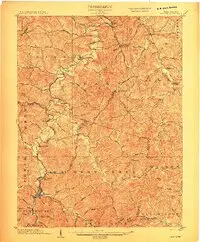
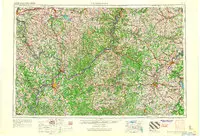
Old maps
Investigated on TV
- Ghost Hunters · Season 4, episode 9 — “Haunted Asylum”2008
- Ghost Hunters · Season 9, episode 25 — “The 200th Episode: Grant is Back”2014
- Portals to Hell · Season 1, episode 6 — “Trans-Allegheny Lunatic Asylum”2019
Where it is
The circle shows the general area only. Open on the full map
Sources
- National Register nomination #78002805 (texte intégral) — U.S. National Park Service · Public record
- National Register of Historic Places file (NRHP #78002805) — U.S. National Park Service · Public domain (U.S. government)
- Wikimedia Commons category : Weston State Hospital — Wikimedia Commons
- USGS 1:250000-scale Quadrangle for Clarksburg, WV 1956 — U.S. Geological Survey, 1956 · Public domain (USGS)
- USGS 1:62500-scale Quadrangle for Weston, WV 1904 — U.S. Geological Survey, 1904 · Public domain (USGS)
- "A Visit to the Trans-Allegheny Asylum; or, On Hauntings and History" — CrimeReads (Nora Fussner, 16 Oct 2023). — CrimeReads (Nora Fussner, 16 Oct 2023).
- "Eerie Encounters" — Group Tour Magazine. — Group Tour Magazine.
- "Episode Recap: Haunted Asylum" (Ghost Hunters S4) — Syfy. — Syfy.
- "Former lunatic asylum now a lure for ghost hunters" — Associated Press via Fox News (21 Dec 2011). — Associated Press via Fox News (21 Dec 2011).
- "Ghost Tours" — Trans-Allegheny Lunatic Asylum (official site). — Allegheny Lunatic Asylum (official site).
- Official website
- "Trans-Allegheny Asylum Ghost Stories" — Ghostwalks.com — Ghostwalks.com (lead only, low reliability).
- "Trans-Allegheny Lunatic Asylum: West Virginia's Dark Tourist Destination" — Michael Kleen (author/historian blog, 22 Sep 2020). — Michael Kleen (author/historian blog, 22 Sep 2020).
- "Weston State Hospital" — e-WV: The West Virginia Encyclopedia (West Virginia Humanities Council). — WV: The West Virginia Encyclopedia (West Virginia Humanities Council).
- "What Lurks in the Halls of Trans-Allegheny Lunatic Asylum at Night?" — Mid-Atlantic Day Trips (Oct 2021). (not read directly) — Atlantic Day Trips (Oct 2021). (lead only, used via search excerpt
- Wikipedia article — Wikipedia · CC BY-SA 4.0
Text written by AI from the sources above and checked by a separate AI fact-check (how we work). Images: credits and licenses under each picture.
Spotted a mistake? Report an error