
Haunted place · Pennsylvania, United States
Cliveden
Updated November 202610 sourcesHow to visit
- Protected heritage
- 13 archive documents
Georgian mansion in Philadelphia's Germantown where British troops held off Washington's army in 1777; legend says slain soldiers and a headless woman remain.
The story
Cliveden stands on Germantown Avenue in Philadelphia's Germantown neighborhood, a gray stone country house that found itself at the center of a Revolutionary War battle. It was built in the 1760s (the National Register nomination says 1763-64, Wikipedia 1763-1767) as the summer retreat of Benjamin Chew, then Pennsylvania's attorney general and later chief justice of the colony's Supreme Court. Chew had trained under the lawyer Andrew Hamilton and inherited his most prestigious clients, the heirs of William Penn. The house was probably designed by Chew himself working with master carpenter Jacob Knor.
When the Revolution broke out, Chew's loyalties were suspect. He lost his offices, and as Washington's army moved toward Philadelphia, the revolutionary authorities removed him and his family from Cliveden; the nomination says he was paroled to New Jersey. The house was empty of its owners when war arrived at the door.
On October 4, 1777, Washington launched a dawn attack on the British forces guarding the northwestern approach to newly occupied Philadelphia. Cliveden sat about a mile ahead of the main British line, held by Lieutenant Colonel Thomas Musgrave and roughly 120 men of the 40th Regiment of Foot. As General Sullivan's column pushed through thick fog, Musgrave's soldiers barricaded themselves inside the house and fired from the windows. American artillery under Henry Knox blew in the front door, but the cannon could do little against the heavy masonry walls, and repeated assaults failed. Wikipedia gives 57 Americans killed and dozens wounded around the house, though that figure is weakly sourced. Meanwhile, Greene's column had lost its way in the fog, Sullivan's men were fired on by their own side, and the American line gave way. Washington's army retreated, and Cliveden had never fallen.
The battle was a defeat, yet historians, and the nomination form, stress its consequences: coming the same month as the victory at Saratoga, the boldness of the attack helped persuade France to ally with the United States. Chew was allowed back the following year and spent more than eighteen months repairing the battle damage. Washington and Lafayette were among the guests later received at Cliveden. Seven generations of Chews lived in the house until 1972, when it passed to the National Trust for Historic Preservation. It was named a National Historic Landmark in 1961 and added to the National Register in 1966, and it belongs to the Colonial Germantown Historic District.
The legend
The ghost lore at Cliveden is modest, and it is mostly what one would expect of a house where men died in combat. The most common story is that Continental soldiers killed while storming the house in 1777 still walk the grounds. Philadelphia Magazine includes Cliveden in its round-up of the city's haunted houses on that basis, but no source describes a particular sighting, a date or a named witness.
The second story is a stranger folk motif: an old woman wandering the property in search of her missing head. Two explanations circulate. In one, a soldier, himself one of the ghosts, cut it off; in the other, a cannonball took it. Neither version is attached to any real person known to have lived or died at Cliveden.
A third piece of lore surfaced on a Halloween tour in 2011. During "Ghosts of the Great Road," a joint event of Historic Germantown and the Museum of the Macabre, participants were seated in darkness on the front steps and then led up to the attic, where a drawing on the wall was presented as the work of a dying soldier using his own blood. WHYY, which covered the event, reported it as tour storytelling; nothing confirms the claim.
It is worth noting what is missing. The Chew family, who lived here for about two centuries, never reported a haunting, according to one source, and no first report can be dated. Our sources mention no paranormal TV show or named investigation group at the house. The stories appear to have grown in local lore and seasonal events rather than from the family's own experience. The battle itself, with its very real dead, is the solid foundation; the ghosts are best treated as legend.
What remains today
The mansion survives as a fine example of Philadelphia's Late Georgian style. It is two and a half stories over a full cellar and measures about 54 by 44 feet. Only the front is dressed gray ashlar; the side and rear walls are rubble stone, stuccoed and scored to look like cut blocks. A narrow central pavilion carries a heavy pediment, the doorway is framed by Doric columns, and five large urns sit on the roof among arched dormers. Inside, the entrance hall is unusually grand, about 16 by 27 feet, separated from the stair hall by a screen of Doric columns. The woodwork is particularly fine. Kitchen and servants' quarters were in detached two-story wings at the back, and an early barn stands behind the house. The grounds cover around six acres in the middle of today's Germantown.
Visiting
Cliveden is operated by the National Trust for Historic Preservation as a historic house museum and, according to Wikipedia, offers tours from April through December. Check the official website (cliveden.org) for current days, times and special events before you go. The 2011 Halloween program is the only ghost event documented in our sources, and whether anything similar is offered today is unknown. The house lies within the Colonial Germantown Historic District, so the surrounding streets are worth a walk too. Please treat the site with respect: it is a battlefield where dozens of soldiers died.
The ghosts
Continental soldiers of the Battle of Germantown
Said to be American soldiers killed attacking the house on October 4, 1777
The soldiers who died storming the British-held house are said to haunt the grounds. No dated sighting or named witness is recorded. A drawing in the attic was presented on a 2011 Halloween tour as the work of a dying soldier using his own blood.
- Apparitions
Reported by: Philadelphia Magazine; History Collection; Ghosts of the Great Road tour (2011, via WHYY)
The headless old woman
An elderly woman is said to roam the property looking for her head, lost either to a soldier's blade or to a cannonball. She is not linked to any known historical person.
- Apparitions
Reported by: Philadelphia Magazine; History Collection
Photographs


From the archives


Old maps
Where it is
The circle shows the general area only. Open on the full map
Sources
- National Register nomination #66000677 (texte intégral) — U.S. National Park Service · Public record
- National Register of Historic Places file (NRHP #66000677) — U.S. National Park Service · Public domain (U.S. government)
- Wikimedia Commons category : Cliveden (Germantown, Pennsylvania) — Wikimedia Commons
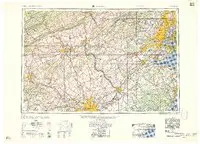
- USGS 1:250000-scale Quadrangle for Newark, NJ 1957 — U.S. Geological Survey, 1957 · Public domain (USGS)
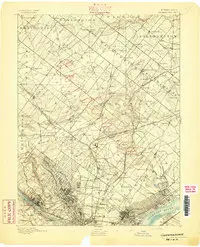
- USGS 1:62500-scale Quadrangle for Germantown, PA 1893 — U.S. Geological Survey, 1893 · Public domain (USGS)
- Germantown rolls out historic hauntings for Halloween — WHYY (Jeanette Woods, 14 Oct 2011) — WHYY (Jeanette Woods, 14 Oct 2011
- Official website
- Real haunted houses in Philadelphia — Philadelphia Magazine (Sandy Smith, c. Oct 2024) — Philadelphia Magazine (Sandy Smith, c. Oct 2024
- The Chilling History Behind These 18 Allegedly Haunted Sites in the United States — History Collection — History Collection (weak source
- Wikipedia article — Wikipedia · CC BY-SA 4.0
Text written by AI from the sources above and checked by a separate AI fact-check (how we work). Images: credits and licenses under each picture.
Spotted a mistake? Report an error