
Haunted place · Oregon, United States
Sumpter Valley Gold Dredge
Updated November 20269 sourcesHow to visit
- Protected heritage
- 4 archive documents
Oregon's last gold dredge (1935) at Sumpter, now a state heritage site, said to be haunted by "Joe Bush," a ghost its own crew admitted began as a joke.
The story
Gold was found in the Powder River district of the Blue Mountains in eastern Oregon in 1862, during the rush that brought prospectors to the placer diggings of eastern Oregon and western Idaho. Sumpter, Bourne and Granite became the three corners of activity on the upper river. In 1896 a large lode was found near Bourne, and that same year the Sumpter Valley narrow-gauge railroad reached Sumpter from Baker. Together they brought in hard-rock mining and heavy machinery. Sumpter boomed from 1899 to 1903. According to local accounts cited in the National Register nomination, by 1901 the town covered some 1,400 acres and its buildings and improvements were worth about $500,000. After that it declined, and fires did further damage.
Dredging came next. A dredge is essentially a floating factory that digs up the riverbed, washes out the gold and leaves piles of gravel behind it. The nomination says the first dredge in the valley worked from 1913 to 1924 and a second from 1915 to 1923. The third, the one that survives, was built in 1935, incorporating some of the machinery of the first, which had been idle for about ten years. It was a Yuba-type dredge run by the Sumpter Valley Dredging Company of Portland, financed by a family whose shipbuilding business had done well in the First World War. Engineer W. H. Cullers designed it, became the company's president and stayed involved until he died in 1944. Unlike earlier dredges, which were built in pits that were then flooded, this one was built on the bank and launched like a ship. Production started during the New Deal, after Franklin D. Roosevelt's gold policy raised the price to about $35 an ounce.
The dredge was huge. Its hull measures 52 by 120 feet. A line of 72 buckets, each holding 9 cubic feet and driven by a 250-horsepower electric motor, dug 13 to 16 feet down to bedrock, while pumps moved 8,000 gallons of water a minute through revolving screens. In 1938 it reportedly chewed through up to 10 acres of valley floor in one month. It ran day and night, 363 days a year, with only the Fourth of July and Christmas off. Three men ran the machinery on each shift, and 17 more according to Wikipedia, or as many as twenty according to the nomination, handled maintenance, bookkeeping, surveying, trucking and management. Most were local townspeople. One or two men stayed on board overnight to watch it.
The dredge stopped during the Second World War, was sold to the Baker Dredging Company in 1948 and passed to the Powder River Dredging Company in 1950. In its final season in 1954 it was reworking old tailings and had moved to the edge of Sumpter itself. Its operators reportedly hoped to buy part of the townsite, but rumors drove land prices up and the plan fell through. The three dredges traveled more than 8 miles and recovered $10 to 12 million in gold, about $4.5 million of it from this one. They still cost more to run than they earned, and the last one shut down more than $100,000 in debt. It was left where it stopped.
The legend
The dredge has one ghost, Joe Bush. According to the stories, when the machine was shut down for the season or for repairs, the crew heard him "haunting" the boat. The Wikipedia article on him, drawing on a 1999 feature by D. Schoeningh titled "Dredging up the Past" in the Oregon Trail supplement, lists the usual signs: damp footprints of bare feet across the deck, lights that flicker, and doors opening and closing by themselves. Anything that went wrong on board was blamed on him.
What makes Joe Bush unusual is that the people who knew him say they made him up. Former dredge worker Wes Dickson said the whole thing began as a joke and credited co-worker George Hansen with spreading it by blaming every problem on "Joe Bush." No source identifies a real Joe Bush who died on the dredge. He seems to be crew folklore, a shared invisible scapegoat that outlasted the men who invented it. Ghost stories rarely come with an admitted prank behind them, and that admission is the most interesting thing about this one.
The story has had a life beyond the valley. The Skeleton Creek novels borrow him too: one character poses as Joe Bush. The Syfy reality show Ghost Mine (2013) followed miners and investigators at a historic gold mine in the Sumpter area, and Wikipedia says the dredge was part of one of its paranormal investigations. That claim has no citation, and no episode has been identified, so treat it with caution.
What remains today
Dredge No. 3 is the last surviving gold dredge in Oregon. It remains in its pond on the edge of Sumpter, surrounded by the long ridges of gravel tailings it and the earlier dredges left across the valley. These piles are the most visible reminder of how thoroughly dredging changed the land. When it was listed on the National Register in 1971, the dredge was in poor condition after years of hard winters, and its office, machine shops and other support buildings were already gone. It is now the center of the Sumpter Valley Dredge State Heritage Area, run by the Oregon Parks and Recreation Department, which includes a gift shop and museum showing a video of interviews with former dredge workers, along with historic photographs and artifacts.
Visiting
This is a public state heritage area with guided tours of the dredge. The museum's video of former workers is the closest you can get to the men who told the Joe Bush stories. No ghost tour is offered. Current opening days are not confirmed, so check with Oregon Parks and Recreation before you go. The dredge is a large industrial machine, so follow staff instructions when you are aboard. A trip to the dredge fits well with a look around Sumpter itself and the Blue Mountains mining country.
The ghosts
Servant or worker
Joe Bush
Said to be Legendary crewman; no real person of that name who died on the dredge has been identified
The crew blamed everything that went wrong on Joe Bush and said he haunted the dredge when it was shut down, leaving wet bare footprints, making lights flicker and opening doors. Former worker Wes Dickson said the story started as a joke spread by co-worker George Hansen.
- Footsteps
- Strange lights
- Doors opening
First reported: 1935-1954 (crew lore); first print found 1999. Reported by: Dredge workers; D. Schoeningh, 'Dredging up the Past' (Oregon Trail, 1999); Wikipedia
Photographs


From the archives

Old maps
Where it is
The circle shows the general area only. Open on the full map
Sources
- National Register nomination #71000676 (texte intégral) — U.S. National Park Service · Public record
- National Register of Historic Places file (NRHP #71000676) — U.S. National Park Service · Public domain (U.S. government)
- Wikimedia Commons category : Sumpter Valley Gold Dredge — Wikimedia Commons
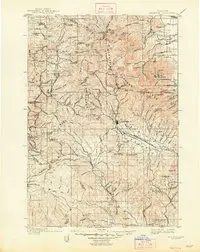
- USGS 1:125000-scale Quadrangle for Sumpter, OR 1901 — U.S. Geological Survey, 1901 · Public domain (USGS)
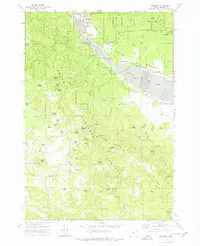
- USGS 1:24000-scale Quadrangle for Sumpter, OR 1972 — U.S. Geological Survey, 1972 · Public domain (USGS)
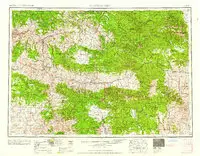
- USGS 1:250000-scale Quadrangle for Canyon City, OR 1959 — U.S. Geological Survey, 1959 · Public domain (USGS)
- Ghost Mine (Syfy, 2013) — TVmaze — TVmaze
- "Joe Bush (ghost)" — Wikipedia — Wikipedia
- Wikipedia article — Wikipedia · CC BY-SA 4.0
Text written by AI from the sources above and checked by a separate AI fact-check (how we work). Images: credits and licenses under each picture.
Spotted a mistake? Report an error