
Haunted place · Colorado, United States
Pioneer Park
Updated November 20266 sourcesHow to visit
- Protected heritage
- 3 archive documents
An 1885 Second Empire house in Aspen, Colorado, said to be haunted by Harriet Webber, whose 1881 strychnine death was ruled an accident amid rumors.
The story
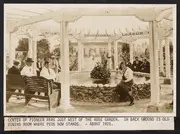
Pioneer Park is the name Henry Webber gave to the brick house he built in Aspen's West End in 1885, during the town's silver boom. Local records also call it the Henry Webber House; the name Webber-Paepcke House honors the two owners who left the strongest mark on it.
Webber reached Aspen from the East in 1880, when the place was still a mining camp of tents and log cabins. He opened a shop selling boots, shoes and clothing, first operating from a log building, and put his profits into local mines. The investments paid off and made him rich. He became city treasurer in 1883, was elected mayor in 1888, and in 1891 put up one of the largest commercial buildings downtown, the Webber Block, later known as the Elks Building. Wikipedia notes that he won the mayoral race even after it came out that he had left a wife and family behind before his marriage to Harriet. He sold his shoe business in 1889 and died in Aspen in 1911.
His wife, Harriet, came west with him and belonged to a group of just thirteen women who endured the camp's hard winter of 1880-1881. On May 29, 1881, she died of strychnine poisoning. At the time, anyone could buy strychnine over the counter as a tranquilizer, and her death was officially treated as an accident. Gossip told another story: that she had taken her own life, or worse, because of an affair between her husband and her niece, Julia Nevitt. Henry married Julia about four months later. According to Wikipedia, Harriet's last words were reported as "Henry will know", a phrase that kept the rumors alive.
When the silver market collapsed after the repeal of the Sherman Silver Purchase Act in 1893, Aspen shrank from more than 10,000 people to about 500 by 1930. Many boom-era houses were abandoned and lost to fire or harsh winters. Pioneer Park survived because a family of local blacksmiths, the Prechtls, lived in it after Webber's death.
The house's second life began in the mid-1940s, when the Chicago industrialist Walter Paepcke, president of the Container Corporation of America, and his wife Elizabeth bought it as a summer home (1945 according to the National Register nomination, 1944 according to Wikipedia). The Paepckes are remembered as the founders of modern Aspen: they backed the first ski area on Aspen Mountain and launched the music festival, the Aspen Institute and a design conference. In 1949 they organized a convocation for the bicentennial of the German poet Goethe, with Robert Maynard Hutchins of the University of Chicago. The keynote speaker was Albert Schweitzer, on what proved to be his only trip to the United States, and he lodged in the carriage house behind Pioneer Park. That building has been called Schweitzer Cottage ever since. In 1987 the property joined the National Register of Historic Places.
The legend
The ghost said to haunt Pioneer Park is Harriet Webber. The story writes itself: a young pioneer wife dead of poison, a husband suspected of infidelity, a quick remarriage to the niece, and a cryptic last sentence. Wikipedia, citing a 2005 Aspen Times column, reports the local belief that Harriet still walks in the house her husband built.
That is about all the lore there is. No published account describes what people experience there, and there are no named witnesses, no investigations and no television coverage. The 1986 National Register nomination tells the account of Harriet's death in detail, drawing on a 1975 walking-tour booklet from the Aspen Historical Society, but never mentions a ghost.
There is also a chronological problem worth stating plainly. Harriet died in 1881, and Henry built Pioneer Park in 1885, four years later. She never lived in this house. If the legend is taken literally, she haunts a home completed after her death and occupied by her widower and the niece who replaced her. Some may find that fitting; historians would simply note that the ghost story attaches a famous local scandal to the most striking surviving Webber property. The circumstances of her death remain officially an accident, and the suicide and murder versions are rumor, never proven.
What remains today
The National Register nomination calls Pioneer Park one of the most significant houses in Aspen: one of the few built of brick, and the only Second Empire house in town that keeps both its original exterior and much of its interior. It has a mansard roof with pedimented dormers, two polygonal bays on either side of the entrance, and a transom over the front doors with the words Pioneer Park painted on the glass. Inside, black walnut woodwork runs through doors, frames, baseboards and the stair, even on the upper floor. The Paepckes painted the house pink, a shade locals called Paepcke Pink; it has since been repainted a light tan. They also added a small octagonal summer house. A garage and a swimming pool were added by later owners. The original iron fence still lines the street, and rows of mature cottonwoods now shade and partly screen the house. Schweitzer Cottage, the carriage house, is a contributing building of the Register listing; the Webber House is a local landmark.
Visiting
Pioneer Park is a private residence and is not open to the public. There are no ghost tours of the property. You can see it from the public street in Aspen's West End, where it was once included in a Victorian architecture walking tour of the neighborhood, but please stay on the sidewalk and respect the occupants' privacy. The Aspen Historical Society is the best place to learn more about the Webbers, the silver boom and the Paepckes' role in remaking the town.
The ghosts
Harriet Webber
Said to be Harriet Webber, wife of Henry Webber, died of strychnine poisoning on May 29, 1881
Henry Webber's wife died of strychnine poisoning in 1881; the death was ruled accidental but rumored to be suicide or murder linked to his affair with her niece, whom he married months later. She is said to haunt Pioneer Park, though the house was built in 1885, four years after her death. No specific phenomena have been described.
First reported: by 2005 (Aspen Times column cited by Wikipedia). Reported by: Aspen Times (2005), via Wikipedia
Photographs


From the archives
Old maps
Where it is
The circle shows the general area only. Open on the full map
Sources
- National Register nomination #87000189 (texte intégral) — U.S. National Park Service · Public record
- National Register of Historic Places file (NRHP #87000189) — U.S. National Park Service · Public domain (U.S. government)
- USGS 1:250000-scale Quadrangle for Leadville, CO 1959 — U.S. Geological Survey, 1959 · Public domain (USGS)
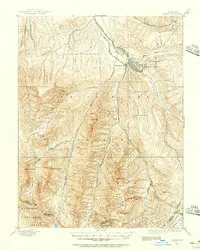
- USGS 1:62500-scale Quadrangle for Aspen, CO 1893 — U.S. Geological Survey, 1893 · Public domain (USGS)
- NRHP Nomination Form, "Pioneer Park" (Barbara Norgren, 1986) — National Park Service — National Park Service
- Wikipedia article — Wikipedia · CC BY-SA 4.0
Text written by AI from the sources above and checked by a separate AI fact-check (how we work). Images: credits and licenses under each picture.
Spotted a mistake? Report an error