
Haunted place · Connecticut, United States
Old State House
Updated November 202611 sourcesHow to visit
- Protected heritage
- 9 archive documents
Bulfinch's 1796 capitol in Hartford, scene of the Amistad case, where staff tell of voices and Ghost Hunters taped a doorknob turning and a woman's sigh.
The story
Connecticut's Old State House stands on Main Street in downtown Hartford, looking east over the oval of open ground once called State House Square. The site was civic ground long before the present building: Hartford's first meeting house stood here in the 17th century, and the square served the town for public gatherings and ceremonies. The National Historic Landmark nomination treats that open space as part of the landmark itself.
The General Assembly authorized a new State House in May 1792, and construction ran from 1793 to 1796. The design is generally credited to Charles Bulfinch, and it is considered his first public building, a forerunner of his larger works in Boston such as the Massachusetts State House. Architectural historians trace its general form to John Wood's Liverpool Town Hall of 1748-1755, and its rusticated base, pavilions and open arcades to Sir William Chambers's Somerset House in London. In Bulfinch's hands that vocabulary became an early American statement of the Adam-influenced Federal style.
For more than eighty years the building held all three branches of state government, with legislative chambers on the tall upper floor, the Secretary of State in the west pavilion and the Supreme Court below. In 1795 Asher Benjamin built a freestanding spiral stair at the north end of the Secretary of State's office; he believed its circular handrail was the first of its kind in New England. It was lost during the 19th century and never rebuilt.
Major chapters of American history unfolded here. The Hartford Convention of 1814 debated the powers of the states against those of the federal government. The state's Constitutional Convention met here in 1818. The building also saw the trial of Prudence Crandall, and in 1839 the opening of the Amistad case, the legal fight over the Africans who had seized the slave ship of that name.
The outside changed early and then very little. A wooden balustrade went up along the roofline in 1815 so firemen could work safely on the roof, and between 1825 and 1827 a cupola modeled on the one atop New York's City Hall was added. In 1854 the open arcade that once ran clear through the ground floor was walled in at both ends. Sources differ slightly on the date state government left: the official history gives 1878, while the NRHP nomination places the move to the new Capitol in 1879. The old building then became Hartford's City Hall, and four decades of municipal use transformed the interior so thoroughly that when the city moved out around 1920 little more than the shell could be kept. Between 1918 and 1921 nearly the entire interior was restored or rebuilt; the Supreme Court room, for instance, was recreated largely by educated guesswork, borrowing from Bulfinch's Doric Hall in Boston. The building has welcomed paying visitors since 1921.
The legend
The ghost lore here is modest, and it is worth being clear about that. Over the years a number of people who work in the building, most of them staff, have said they experienced something paranormal. No names or detailed accounts have been published, and no dated first report has turned up. No identified ghost, no tragic figure from the building's long political history, is attached to these stories.
What has been described is fairly generic: before the 2009 television investigation, reports mentioned disembodied voices and footsteps with no one there. The most specific claims come from that investigation. The TAPS team of the Sci Fi Channel series Ghost Hunters spent a night in the Old State House for season 5, episode 24, titled "Unexplained Phenomena," which aired on December 9, 2009, alongside a case at a farmhouse in Willow Grove, Pennsylvania.
The team reported two pieces of audio. In the Senate chamber, the room with the most original woodwork in the building, they recorded what sounded like a doorknob turning while the room stood empty. Upstairs, in the third-floor room that recreates Joseph Steward's museum of curiosities, they captured a sound resembling a woman's sigh at a time when, they said, no women from their crew were inside. Steward had opened his collection of natural specimens and oddities in 1798, and the modern "Museum of Natural and Other Curiosities" revives it for visitors, which gives the sighing woman a suggestive setting but no identity.
TAPS did not declare the building haunted. It left the case open and said it would return for a deeper investigation; no follow-up episode is recorded. A skeptic would point out that both recordings are ambiguous sounds in a busy, much-rebuilt public building, and that the reputation rests largely on a single episode and on staff stories that have never been documented in detail. The Old State House's official site lists no ghost tours or paranormal events, and the institution presents itself firmly as a museum of civic history.
What remains today
Seen from outside, the Old State House is still largely the early 19th-century building. The NRHP description gives a three-story block about 120 by 50 feet, with a twenty-foot ground level faced in Middletown sandstone, brick upper walls in Flemish bond and a low hipped slate roof. The east front, from which speeches were once made to crowds in the square, carries a Doric portico on stuccoed brick columns about seventeen feet tall, with round windows behind it that light the upper stair hall. The so-called third story is mostly an illusion: the upper floor is one double-height level with ceilings of about 28 feet, and the top row of windows simply brings in extra light.
Inside, the exterior and the Senate chamber have been returned to their Federal appearance; the Senate keeps two original fireplaces and pilasters whose capitals were carved during the 1918-1920 work. The House chamber reflects a Victorian treatment, while the halls and courtroom follow Colonial Revival lines. A wide double staircase climbs to a Palladian window. The building is now overseen by the Connecticut General Assembly's Office of Legislative Management, with the Connecticut Democracy Center running it as a museum, and it remains a National Historic Landmark hemmed in by downtown high-rises.
Visiting
The Old State House is a public museum, so visiting is simple and entirely legal. According to its official site it opens Tuesday through Saturday from noon to 5 p.m.; hours and admission can change, so confirm before you travel. Exhibits cover the building's role in Connecticut government and the famous cases tried here, and the recreated Steward museum of curiosities, the room where the Ghost Hunters sigh was recorded, is part of the visit.
There are no ghost tours or after-hours paranormal events on offer, and visitors should not try to linger past closing or enter areas marked as off limits. Outside opening hours you can still take in the east portico and the square in front, which has been the heart of Hartford's public life for more than three centuries.
The ghosts
Spirit
The Senate chamber doorknob
TAPS also reported audio of a doorknob apparently being turned while the Senate chamber was empty. The team issued no verdict and left the case open.
- Doors opening
- EVP recordings
First reported: 2009. Reported by: Ghost Hunters (TAPS), Sci Fi Channel, 2009
The sighing woman
During the 2009 Ghost Hunters investigation, the team captured a faint, female-sounding sigh in the third-floor room recreating Joseph Steward's museum of curiosities. They said no women from the crew were inside at the time. No identity has ever been suggested.
- Voices
- EVP recordings
First reported: 2009. Reported by: Ghost Hunters (TAPS), Sci Fi Channel, 2009
Spirit
Unseen voices and footsteps
Staff members over the years have described paranormal experiences, with reports of disembodied voices and footsteps before the TV investigation. No names or detailed accounts are documented.
- Voices
- Footsteps
First reported: Before 2009. Reported by: Building staff (unnamed)
Photographs


From the archives


Old maps
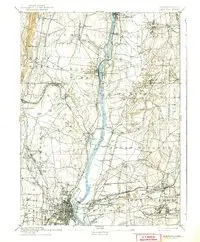
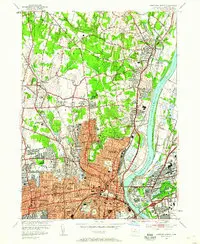
Where it is
The circle shows the general area only. Open on the full map
Sources
- National Register nomination #66000878 (texte intégral) — U.S. National Park Service · Public record
- National Register of Historic Places file (NRHP #66000878) — U.S. National Park Service · Public domain (U.S. government)
- An Historical Account of The Old State House Of Pennsylvania — Internet Archive · Frank M. Etting, 1876-01-01 · Public domain (pre-1929)
- An historical account of the old State house of Pennsylvania now known as the Hall of independence — Internet Archive · Etting, Frank M. (Frank Marx), 1876-01-01 · Public domain (pre-1929)
- Prytaneum bostoniense. Notes on the history of the Old state house, formerly known as the Town house in Boston--the Court house in Boston--the Province court house--the State house--and the City hall; — Internet Archive · Moore, George Henry, 1823-1892, Whitmore, William Henry, 1836-1900, 1885-01-01 · Public domain (pre-1929)
- Wikimedia Commons category : Old State House, Hartford, Connecticut — Wikimedia Commons
- USGS 1:24000-scale Quadrangle for Hartford North, CT 1952 — U.S. Geological Survey, 1952 · Public domain (USGS)
- USGS 1:62500-scale Quadrangle for Hartford, CT 1892 — U.S. Geological Survey, 1892 · Public domain (USGS)
- List of Ghost Hunters episodes — Wikipedia — Wikipedia
- Official website
- Wikipedia article — Wikipedia · CC BY-SA 4.0
Text written by AI from the sources above and checked by a separate AI fact-check (how we work). Images: credits and licenses under each picture.
Spotted a mistake? Report an error