
Haunted place · California, United States
Mission San Juan Capistrano
Updated November 202615 sourcesHow to visit
- Protected heritage
- 8 archive documents
Mission San Juan Capistrano (1776), Orange County: the 1812 church collapse, Magdalena's candlelit face, the faceless monk and a 2013 Ghost Hunters visit.
The story
Mission San Juan Capistrano stands in the Orange County town that grew up around it. Franciscan missionaries founded it in 1776, in what was then the Spanish province of Alta California, and named it for Saint John of Capistrano, a fifteenth-century Italian priest. The 1970 National Register nomination calls it the seventh mission in the chain begun under Junípero Serra.
A first attempt had been abandoned. When Serra came back with fathers Amúrrio and Pablo de Mugártegui and eleven soldiers at the end of October 1776, they unearthed the bells buried on the earlier visit and found their wooden cross still standing at the place now called "Mission Vieja." Serra celebrated a Mass of thanksgiving on November 1, 1776, still kept as the founding date. Because water was short, the mission was later moved about three miles west, to a spot within 60 yards of the Acjachemen village of Acágcheme, above the Trabuco and San Juan streams. Its registers of baptisms, marriages, burials and confirmations survive; some 4,639 people were baptized there between 1776 and 1847.
An adobe chapel was blessed in 1778. Wikipedia says a larger church about 115 feet long replaced it in 1782, the building now called the Serra Chapel and often described as California's oldest standing structure; the nomination instead treats the 1778 chapel as Serra's church. Either way, it is the only surviving church where Serra is known to have said Mass. Around it grew a quadrangle of living quarters, kitchens, workshops, storerooms and soldiers' barracks, and by 1812 the complex had 36 adobe rooms, including granaries, tanning, candle-making and spinning shops and a hospital.
The mission's great project was the Great Stone Church, begun on February 2, 1797. Laid out as a cross some 180 feet long, with 50-foot walls and a bell tower said to be visible ten miles off, it was the only church in Alta California built of stone rather than adobe. The whole convert population helped haul sandstone from creek beds up to six miles away, by oxcart, by hand and by dragging. Finished in 1806, it stood only six years. On December 8, 1812, an earthquake brought down the church and its tower during Mass, killing 40 Native worshippers and two boys who were ringing the bells; they were buried in the mission cemetery. Two of the four bells cracked, and all four have hung in a separate bell wall, the campanario, since 1813.
After Mexican independence in 1821 the mission declined: cattle disease, a mustard-weed infestation, floods, drought and settlers eager for its land took their toll, and the Native population drifted away. The Mexican government secularized it in 1833, and in 1865 a proclamation by President Abraham Lincoln returned it to the Church. The nomination dates restoration by the Landmarks Club to 1900, while Wikipedia says efforts began around 1910. The pastor St. John O'Sullivan rebuilt storm-damaged barracks in 1917 and became the first modern pastor in 1918; a ten-cent admission fee had been charged since 1916 to fund preservation. In 1919 Johnston McCulley set the first Zorro story, The Curse of Capistrano, at the mission. O'Sullivan died in 1933 and is buried in the cemetery among more than 2,000 former residents, mostly Juaneño people in unmarked graves.
The legend
The best-loved story comes straight out of the 1812 disaster. Magdalena, a Native girl who lived on the mission grounds, loved a young artist, Teófilo; the older generation judged the pair not yet old enough to wed, so the romance stayed hidden. On the morning of the earthquake she was walking in front of the procession holding a penitent's candle. As the walls began to fall, Teófilo ran into the church to save her, and when the rubble was cleared the two were found together among the dead, wrapped in each other's arms. On moonlit nights, the legend says, a girl's face lit as though by candlelight sometimes appears high in the ruins (some tellings place it in a church window). The earthquake and its victims are real, but no historical record of a Magdalena or a Teófilo among them is known, and the first written version of the tale is undated. Whether O'Sullivan's 1912 booklet Little Chapters about San Juan Capistrano includes it is not confirmed.
Two lesser figures complete the cast. A hooded monk without a face is said to roam the passages of the first quadrangle, and locals say that seeing his face means sudden death. A headless soldier supposedly stands guard near the front entrance, and a soldier's footsteps are reported near the barracks. Many of the mission's stories were handed down by José de Gracia Cruz, known as Acú, a Juaneño descendant who rang the bells until his death in 1924.
The mission's ghosts reached television in Ghost Hunters (TAPS), season 9, episode 2, "Ghost Mission," aired January 23, 2013. Among the claims the team heard or checked were voices; a shadow gliding along a corridor; footsteps; a figure by the courtyard fountain, with a heavy scent of perfume lingering where it had been; rapping sounds inside the barracks; a sudden drop in temperature in the cemetery, and batteries and microphones failing at the same moment. The team's best evidence was a set of voices, possibly speaking Spanish, recorded by investigators KJ and Britt. TAPS founder Jason Hawes judged the activity harmless, though "definitely out of the norm." No skeptical study is known.
Not every legend here is a ghost story. The cliff swallows, which fly about 6,000 miles from Goya, Argentina, each spring, are said to have first taken shelter at the mission after an angry innkeeper began knocking down their mud nests. Their young once nested in the shelter of the stone church ruins, though few birds were counted at the mission in the 1990s and 2000s.
What remains today
The mission is a museum and historic church. The Serra Chapel still stands; the 1970 nomination noted original artifacts and Native decorations inside, and a sanctuary enlarged around 1930 for a large altarpiece given by Spain. The campanario, the padres' quarters and kitchens, the calabozo (detention room), the barracks, gardens and fountains remain, with the Sacred Garden created in 1920 beside the stone church. Parts of the Great Stone Church's sanctuary, sacristy and transept walls still rise as ruins; the World Monuments Fund listed it among the 100 most endangered sites in 2002. Archaeologists dug out the ruined workshops, smelter and hospital along the quadrangle's western edge in the 1930s, and the metalworking furnaces became an ASM International landmark in 1988. The mission is on the National Register of Historic Places and is a California Historical Landmark.
Visiting
The mission is open to the public as a museum run by the Mission San Juan Capistrano organization; check missionsjc.com for hours, tickets and events. The official site does not promote the ghost stories or offer ghost tours. Its Día de los Muertos ofrenda is an act of remembrance, not a paranormal event. The stone church ruins are fragile and the cemetery holds thousands of unmarked graves, so stay on the paths and respect closed areas.
The ghosts
Spirit
Courtyard figure
Claims examined by Ghost Hunters included a figure by the fountain with a lingering perfume, voices, a shadow in a corridor, knocking in the barracks and a cold drop in the cemetery. The team recorded voices possibly in Spanish.
- Apparitions
- Smells
- Voices
- Footsteps
- Cold spots
First reported: 2013. Reported by: Ghost Hunters S09E02 (2013)
Faceless monk
A hooded, faceless monk reputedly roams the first quadrangle; according to local belief, whoever glimpses his face will die suddenly.
- Apparitions
Reported by: Local legend (Wikipedia; Syfy)
Headless soldier
A soldier without a head reportedly keeps watch by the main entrance, and a soldier's footsteps are reported near the barracks.
- Apparitions
- Footsteps
Reported by: Local legend (Wikipedia; Syfy)
Magdalena, the candlelit girl
Said to be Magdalena, a young Native girl said to have died in the 1812 collapse of the Great Stone Church (no historical record found)
In the legend she died carrying a penitent's candle when the 1812 earthquake brought down the stone church, and her secret love Teófilo died trying to reach her. When the moon is bright, people say a girl's candlelit face can be seen up in the ruined walls. The earthquake is real; the lovers are not documented.
- Apparitions
- Strange lights
Reported by: Local legend (Wikipedia; Syfy)
Photographs


From the archives


Old maps
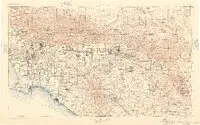
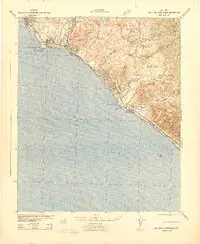
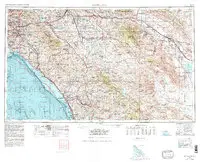
Where it is
The circle shows the general area only. Open on the full map
Sources
- National Register nomination #71000170 (texte intégral) — U.S. National Park Service · Public record
- National Register of Historic Places file (NRHP #71000170) — U.S. National Park Service · Public domain (U.S. government)
- San Juan Capistrano mission — Internet Archive · Engelhardt, Zephyrin, 1851-1934, 1922-01-01 · Public domain (pre-1929)
- San Juan Capistrano mission — Internet Archive · Engelhardt, Zephyrin, 1851-1934, 1922-01-01 · Public domain (pre-1929)
- San Juan Capistrano mission — Internet Archive · Engelhardt, Zephyrin, 1851-1934, 1922-01-01 · Public domain (pre-1929)
- San Juan Capistrano Mission — Internet Archive · Engelhardt, Zephyrin, 1851-1934, 1922-01-01 · http://creativecommons.org/publicdomain/mark/1.0/
- Wikimedia Commons category : Mission San Juan Capistrano — Wikimedia Commons
- USGS 1:250000-scale Quadrangle for Santa Ana, CA 1959 — U.S. Geological Survey, 1959 · Public domain (USGS)
- USGS 1:250000-scale Quadrangle for Southern California Sheet No. 1, CA 1901 — U.S. Geological Survey, 1901 · Public domain (USGS)
- USGS 1:62500-scale Quadrangle for San Juan Capistrano, CA 1942 — U.S. Geological Survey, 1942 · Public domain (USGS)
- "Episode Recap: Ghost Mission" — Syfy — Syfy
- "List of Ghost Hunters episodes" — Wikipedia — Wikipedia
- "Mission San Juan Capistrano" (Legends section) — Wikipedia — Wikipedia
- Official website
- Wikipedia article — Wikipedia · CC BY-SA 4.0
Text written by AI from the sources above and checked by a separate AI fact-check (how we work). Images: credits and licenses under each picture.
Spotted a mistake? Report an error