
Haunted place · South Carolina, United States
Bethesda Presbyterian Church
Updated November 202610 sourcesHow to visit
- Protected heritage
- 17 archive documents
Robert Mills's 1822 Bethesda Presbyterian Church in Camden, South Carolina, linked by folklore to Agnes of Glasgow, though her grave likely lies elsewhere.
The story
Bethesda Presbyterian Church faces DeKalb Street, the stretch of U.S. Route 1 that runs through the center of Camden, in Kershaw County, South Carolina. It is a National Historic Landmark, and its importance is architectural: it is one of only a handful of surviving churches designed by Robert Mills.
Presbyterians were worshipping in Camden before the American Revolution. Their first meeting house was destroyed during the war, a replacement stood by 1790, and a third church followed in 1806. As the congregation prospered it decided it needed a larger building in a more central spot. Mills was chosen as architect, and David Bartling, a builder from Philadelphia, is believed to have been the master builder. The new church was formally dedicated in 1822.
Mills (1781-1855) was a native of South Carolina who learned his trade under James Hoban, Thomas Jefferson and Benjamin Latrobe. He is best remembered for designing the Washington Monument and served as Architect of Public Buildings in the national capital, where his influence helped tie the classical style to the young republic's government buildings. The 1984 National Register nomination sees Bethesda as the work of an architect in mid-career, past his apprentice years yet still short of becoming the nation's foremost federal designer, deeply influenced by Jeffersonian classicism. Unlike the auditorium-style churches he had built in Philadelphia and Richmond, Camden got a classical temple. Mills described it himself in his Statistics of South Carolina (1826), praising its portico of four Doric columns, the neat spire at the rear holding a bell, and an interior where floor and pews rise away from the pulpit so that everyone can see and hear the preacher.
The building's later life brought damage and repair. Services were suspended for two Sundays in August 1849 for repairs. An earthquake in 1886 cracked the brick walls, and earthquake bolts were installed. In 1890 the congregation swapped out Mills's pulpit and pews and had a new floor laid over the old one, and at some point the north portico was enclosed. In 1937 the Charleston firm of Simons and Lapham undid much of this: the curtain walls came out, the balcony stairs were rebuilt, a brick porch was added, new box pews and a pulpit were installed following an 1822 floor plan, and the 1890 floor was lifted to reveal the original boards underneath. Further work in 1982-83 repaired the steeple and relaid the south porch using original pavers found on site.
In front of the church stands a second Mills design, the monument to Baron de Kalb, a Continental Army officer killed at the Battle of Camden in 1780. Its cornerstone was laid in 1825 and it was completed in 1827: a white marble obelisk on a pedestal and stepped granite base, carved with a star and a wreath around the words "To Dekalb." The church and monument together were designated a National Historic Landmark in 1985, and the church also contributes to the City of Camden Historic District.
The legend
Wikipedia's article on the church mentions one piece of folklore: that it is haunted by Agnes of Glasgow, said to have been buried in its graveyard and to wander still in search of her lost love. Before you go looking for her here, it is worth knowing how shaky that connection is.
In the legend, Agnes was a young Scottish woman, said to have lived from 1760 to 1780, who stowed away on a ship to follow her fiance, a British officer named Lieutenant Angus McPherson. She landed at Charleston, learned that he had been wounded near Camden, set out to find him, and fell ill and died before she reached him. A Native American leader remembered as King Hagler (or Haigler) of the Catawba or Wateree, who had befriended her, is said to have buried her by night. Her ghost is described roaming a graveyard and the nearby woods, still searching for McPherson. A gravestone bearing her name and the date February 12, 1780, survives, and the tale is told in Edward Boltwood Hull's Guide-book of Camden of 1918.
Historians have pointed out problems. In February 1780 there were no British troops in Camden yet; they came later in the year, before the August battle. And King Hagler had been dead since 1763, when Agnes would have been only about three years old. As told, the story cannot be literally true. An old photograph caption even describes the grave as that of a "first settler," with no romance attached.
The location is also in dispute. Several sources, among them Roadside America and an article by a Camden writer, locate Agnes's stone inside a walled enclosure in the town's old Quaker burial ground, which is also known as the Old Presbyterian cemetery, on Meeting Street, rather than at Bethesda. The present church, in any case, was not built until 1822, more than forty years after her supposed death.
No dated sighting, television episode or named investigation was found. Wikipedia mentions South Carolina press interest and visits by ghost hunters, and The State newspaper covered the story in 2003, but our sources give no details. Agnes is best understood as Camden's signature folk legend rather than as a documented haunting of this church.
What remains today
The church looks much as Mills drew it in an 1827 engraving. Its street front has a Doric portico of four columns, a large round-arched niche flanked by arched double doors, and brickwork in Flemish bond; the other walls are in American bond. The north side, which Mills considered the back, is now the main entrance, with a Tuscan portico and paired stairs climbing to the gallery, beneath a shingled spire on an octagonal louvered belfry topped by an acorn. Inside, the pulpit stands in the arched niche on the south wall, the floor rises toward the north, box pews line the side walls, and the plain coved ceiling is set off by a single delicate medallion of acanthus leaves and rosettes. Scholars still debate whether the north portico was part of Mills's design or an early addition. The church campus has grown to six buildings, though only the sanctuary and the de Kalb monument are part of the landmark.
Visiting
Bethesda is an active Presbyterian church, so the sanctuary is a place of worship first. Visitors are welcome to admire the exterior and the de Kalb monument from DeKalb Street; to see the interior, attend a service or contact the church in advance, and be respectful of services, weddings and funerals.
If it is Agnes you are after, her stone is generally placed in Camden's old Quaker and Presbyterian burial ground, described as open to visitors. Visit in daylight and treat the old graves with care. Camden's historic district, with its Revolutionary War associations, makes a rewarding walk.
The ghosts
Agnes of Glasgow
Said to be Legendary young Scottish woman (said 1760-1780) seeking her fiance, Lt. Angus McPherson
She is said to have followed her British officer fiance to America, died of illness near Camden before finding him, and been buried at night by King Hagler. Her ghost supposedly wanders a graveyard and nearby woods searching for him. Historians note the dates do not fit, and her grave is usually placed in Camden's old Quaker/Presbyterian cemetery rather than at Bethesda.
- Apparitions
First reported: by 1918 (Hull, Guide-book of Camden). Reported by: Local folklore; Edward Boltwood Hull (1918); The State (2003)
From the archives


Old maps
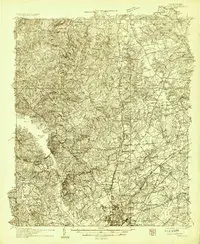
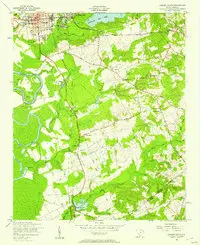
Where it is
The circle shows the general area only. Open on the full map
Sources
- National Register nomination #85003258 (texte intégral) — U.S. National Park Service · Public record
- National Register of Historic Places file (NRHP #85003258) — U.S. National Park Service · Public domain (U.S. government)
- Wikimedia Commons category : Bethesda Presbyterian Church (Camden, South Carolina) — Wikimedia Commons
- USGS 1:24000-scale Quadrangle for Camden South, SC 1953 — U.S. Geological Survey, 1953 · Public domain (USGS)
- USGS 1:48000-scale Quadrangle for Camden, SC 1935 — U.S. Geological Survey, 1935 · Public domain (USGS)
- "Agnes of Glasgow" — Wikipedia (flagged for insufficient citations). — Wikipedia (flagged for insufficient citations).
- "Camden, South Carolina: Agnes of Glasgow's Haunted Grave" — Roadside America (not read directly) — Roadside America (page blocked; seen as search excerpt).
- Photo record "Agnes of Glaslow" grave — Wisconsin Historical Society (not read directly) — Wisconsin Historical Society (page blocked; seen as search excerpt).
- "Storytelling tips via Camden's most famous ghost" — Buckley School of Public Speaking magazine (25 Oct 2017). — Buckley School of Public Speaking magazine (25 Oct 2017).
- Wikipedia article — Wikipedia · CC BY-SA 4.0
Text written by AI from the sources above and checked by a separate AI fact-check (how we work). Images: credits and licenses under each picture.
Spotted a mistake? Report an error